
Thailand’s 2026 enforcement program changes the compliance question. Formal Thai-majority ownership remains relevant, but authorities are increasingly testing whether the funding, control, economic rights and operating facts support the structure recorded on paper.
| The law
Section 36 of the Foreign Business Act already prohibited nominee assistance used to circumvent restrictions on foreign business. |
The 2026 shift
Screening now extends across the corporate lifecycle and increasingly draws on financial evidence, risk analytics and inter-agency investigations. |
The board response
Reconstruct the facts, test both FBA and land-law exposure, and remediate lawfully before an enquiry compresses the available options. |
For boards and investors: A structure is defensible only if its legal form and commercial reality tell the same coherent, evidenced story.
Executive perspective
Thailand has not introduced a new general prohibition on foreign investment. The Foreign Business Act B.E. 2542 (1999) (FBA) continues to define when a person is treated as foreign, restrict specified activities and provide licensing, certificate and exemption routes. Section 36 continues to target Thai persons who assist a foreigner to operate a restricted business unlawfully, including by holding shares as a nominee. The corresponding exposure extends to a foreigner who permits that arrangement.
What changed in 2026 is the enforcement model. Registration screening has moved beyond formation to later changes in shareholders, directors and authorized signatories. Authorities may require investment information and financial evidence to test the source of funds and the Thai investors’ actual capacity. DBD and DSI have also applied risk scoring to corporate populations and coordinated with police, provincial and other authorities in tourism and property markets.
The practical result is a substance-led review. Funding, control and economic benefit are not free-standing statutory elements that automatically decide liability. They are evidence from which officials may assess whether Thai participation is genuine and whether a structure was designed or used to circumvent a restricted-business or land-ownership rule. A foreign director, veto right, shareholder loan or 49 per cent foreign holding is therefore neither automatically unlawful nor a safe harbor.
The compliance response should be equally evidence-led. Companies should identify the business actually conducted, determine the lawful route for foreign participation, reconstruct the funding and governance history, and reconcile legal documents with bank, accounting, tax and operating records. Property-owning companies should run a separate land-law analysis rather than assuming that FBA compliance resolves landholding risk.
The legal rule did not change but the enforcement model did
The 51/49 shorthand comes from the FBA’s definition of a foreigner. A Thai-incorporated juristic person is generally treated as foreign where foreigners hold at least half of its capital shares or have invested at least half of its capital. That classification determines whether the entity faces the restrictions in Lists 1, 2 and 3 and whether a licence, certificate, treaty right or other statutory route is required.
The arithmetic is important, but incomplete. Section 36 separately addresses assistance, support and nominee shareholding used to enable a foreigner to operate a business in violation or circumvention of the Act. It can therefore apply even where the register shows a Thai majority. Equally, a company does not breach the FBA merely because foreigners own 49 per cent, appoint a director, lend money or negotiate protective rights. The relevant analysis starts with the actual activity and then tests whether the ownership and operating arrangements are genuine.
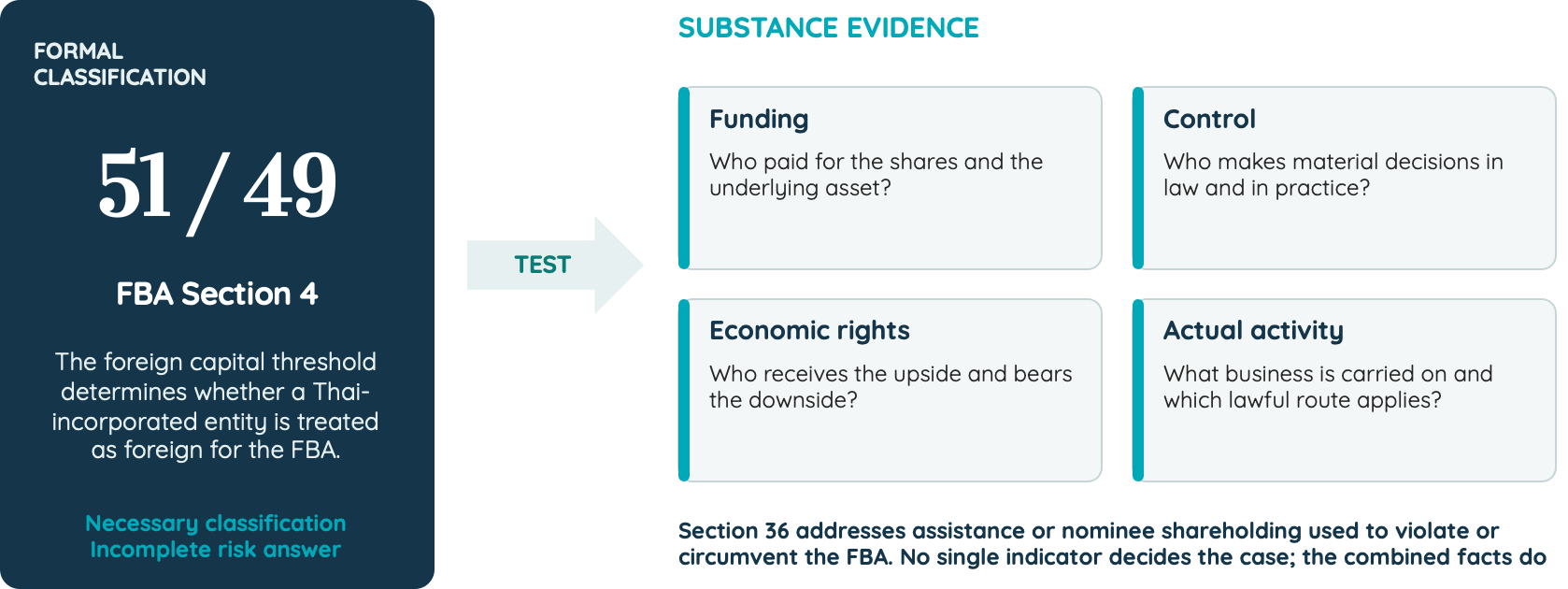
Exhibit 1. Formal ownership classification does not complete the nominee analysis.
Section 36 and Section 37 carry serious consequences. The Act provides for imprisonment of up to three years, a fine of THB 100,000 to THB 1 million, or both, together with an order to cease the assistance or unlawful business. Continued non-compliance with a cessation order may attract a daily fine. Section 30 also gives the Registrar and competent officials information-gathering powers, including the power to require written explanations and documents.
Three developments define the 2026 shift
| Lifecycle screening
DBD controls now address post-registration changes involving foreign shareholders, directors and signing authority, not only the original incorporation. |
Risk-led investigations
DBD’s 2025 program screened defined high-risk sectors; DSI and DBD later used risk analysis across 11,426 Samui and Phangan companies. |
Connected evidence
Investigations increasingly compare corporate filings with bank flows, accounting records, land titles, contracts, tax records and operational facts. |
Registration controls now follow the corporate lifecycle
Ministry of Commerce Order No. 2/2569 took effect on 1 August 2026 and consolidated the DBD’s enhanced registration measures. The associated forms require information on investment and payment and include confirmations intended to test whether capital was genuinely paid and whether Thai participants are acting as nominees. The Government later described the measure as extending screening to structural changes after incorporation, including changes in shareholders, directors and authorized signatories.
This does not convert every filing involving a foreign participant into an investigation. It creates a screening point. Where the prescribed risk criteria are met, applicants may need to produce financial evidence so officials can assess the source of investment funds and actual investment capacity on a case-by-case basis. Contemporary reporting on the DBD measures referred to recent bank statements from relevant Thai investors and recipients of share payments as part of that evidence package.
The distinction matters. A risk flag is not a finding of wrongdoing. The Government has expressly stated that foreign shareholding within the lawful proportion does not automatically establish a nominee arrangement. The company should nevertheless assume that a filing can prompt questions about the underlying transaction and that the answer may be tested against evidence outside the filing itself.
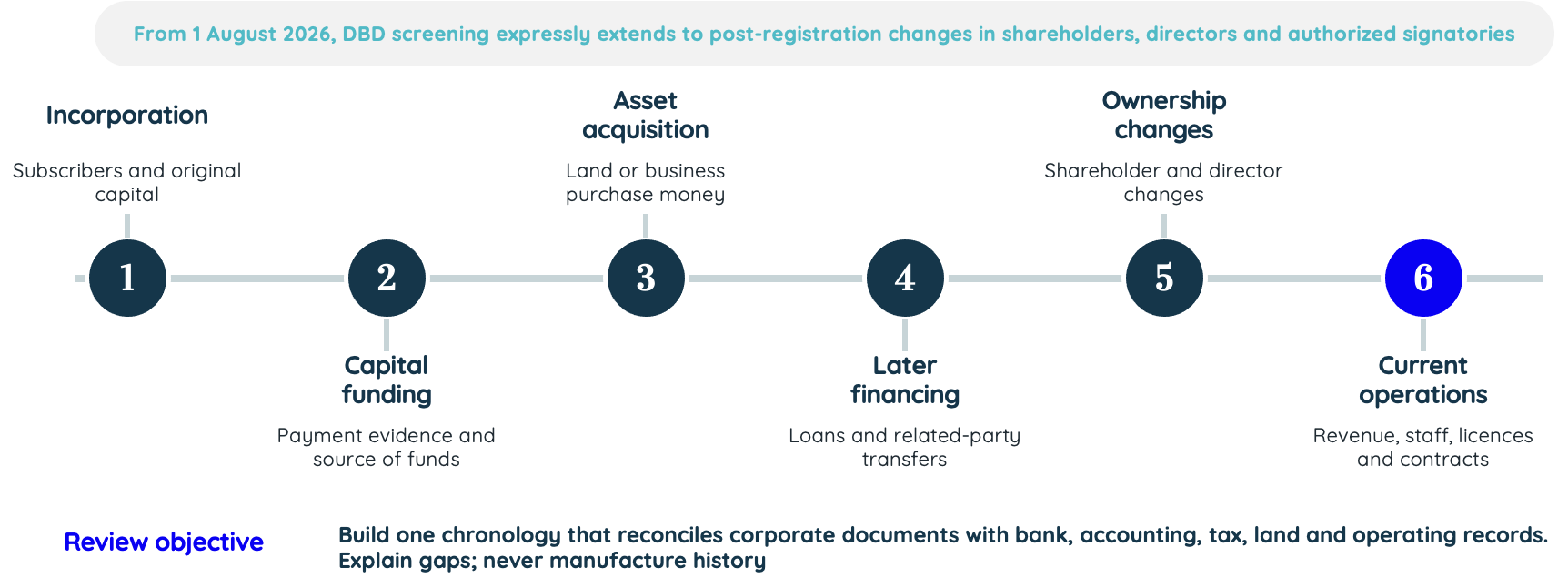
Exhibit 2. DBD screening now follows the corporate lifecycle.
Risk-based investigations are becoming systematic
DBD’s 2025 annual report provides a useful baseline. Its nominee-screening program targeted six sectors: tourism and related businesses; land trading and real estate; e-commerce, logistics and warehousing; hotels and resorts; agriculture-related packing houses; and general construction. DBD sent formal requests for explanations to directors and shareholders of 777 entities.
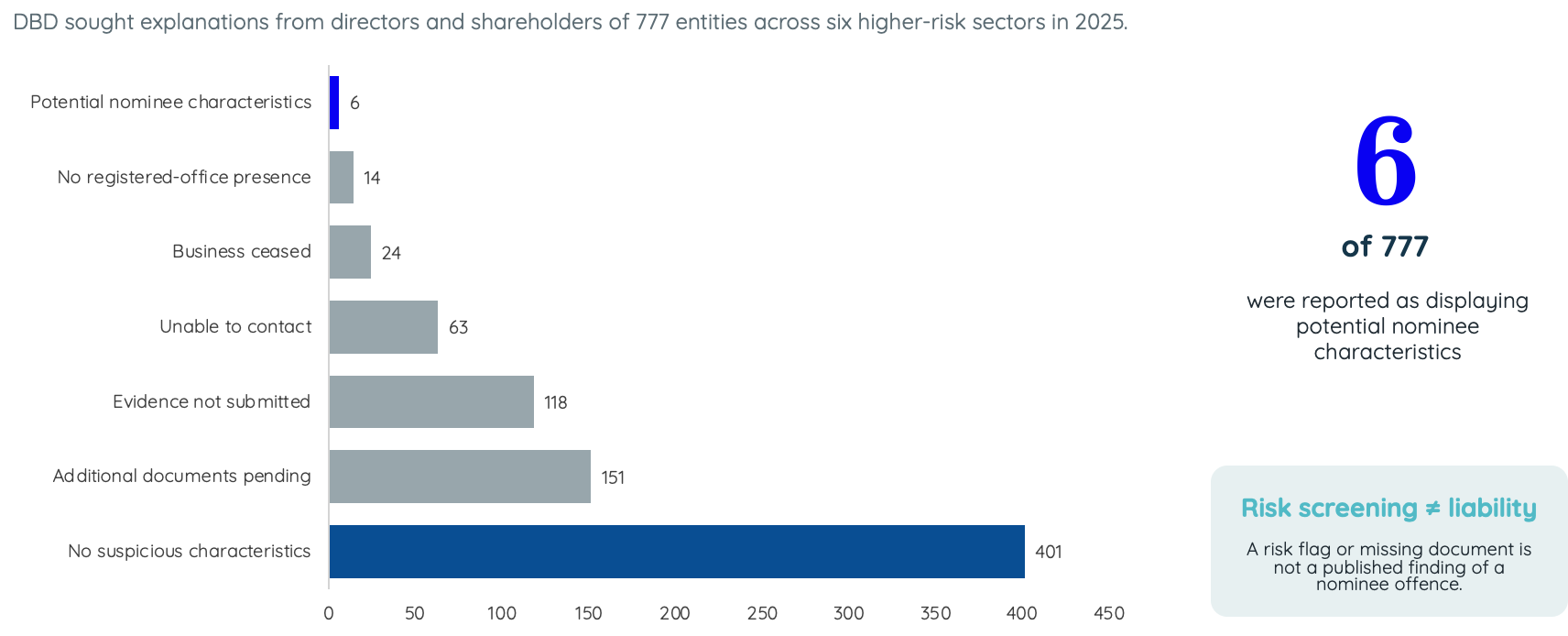
Exhibit 3. DBD identified potential nominee characteristics in six of 777 screened entities.
| DBD 2025 outcome | Entities | Share of 777 | What it does and does not show |
| No suspicious characteristics | 401 | 51.6% | DBD reported no observations or legal violations from the explanations reviewed. |
| Evidence not submitted | 118 | 15.2% | A documentary failure, not a published nominee finding. |
| Additional documents pending | 151 | 19.4% | The review remained open when reported. |
| No registered-office presence | 14 | 1.8% | A factual anomaly requiring follow-up. |
| Unable to contact | 63 | 8.1% | Mail was returned; no substantive finding reported. |
| Business ceased | 24 | 3.1% | The entity was no longer operating. |
| Potential nominee characteristics | 6 | 0.8% | DBD reported admissions that the Thai names were used and foreigners had funded the shares. |
Source: DBD Foreign Business Commission Annual Report 2025. Percentages calculated from published counts and may differ from rounded figures in the report.
The data cuts in two directions. It confirms that DBD is screening by sector and requesting evidence at scale. It also shows why a high-risk classification must not be equated with guilt: 401 entities were cleared in the reported exercise, while only six were described as displaying potentially suspicious nominee characteristics. The enforcement model is selective, but it rewards companies that can answer promptly with consistent evidence.
Property structures sit at the centre of the enforcement program
Real estate is especially exposed because one structure may engage both the FBA and the Land Code. In May 2026, DSI and DBD announced a joint initiative beginning in Koh Samui and Koh Phangan. They reported using data from 11,426 companies to rank risk and said the program would expand to Phuket, Krabi, Phang Nga, Pattaya and Hua Hin.
DSI’s July 2026 operation in Samui and Phangan illustrates the evidence now in play. Its public statement referred to corporate networks, land titles, accounting and contractual records, bank transactions, foreign remittances and the source of Thai shareholders’ investment. DSI also described an alleged professional-services network connected with more than 150 companies, including companies holding property. These were investigative allegations when announced, not judicial findings, and the persons involved remain entitled to the applicable legal process.
The message for advisers is direct. Lawyers, accountants, company-service providers, agents and other intermediaries can become part of the evidentiary record and, in an alleged facilitation case, part of the investigation. Engagement files should show legitimate instructions, independently verified facts and advice designed to achieve compliance, not merely a registration outcome.
A nominee analysis starts with the restricted activity
A nominee is not simply a Thai shareholder associated with a foreign investor. Under Section 36, the core issue is whether a Thai person provides assistance or support, or acts as a nominee in holding shares, so that a foreigner can operate a business in violation or circumvention of the FBA. The analysis therefore has two linked questions.
✓ What business does the enterprise actually conduct, and is that activity restricted under List 1, List 2 or List 3?
✓ If a restriction applies, does the structure reflect genuine Thai investment and participation, or was it designed or used to avoid the applicable rule?
A company’s registered objectives are only a starting point. Its revenue, contracts, staff, marketing, licences and day-to-day conduct determine the business actually carried on. This is particularly important for services that may be described broadly in corporate objects but fall within a restricted category when examined in practice.
Six substance questions now drive the evidence review
| Question | Evidence that supports the structure | Indicators requiring explanation |
| Who paid for the shares | Bank trail, subscription records and credible source-of-wealth evidence | Foreign funds routed to Thai subscribers without a documented, lawful basis |
| Who bears economic risk | Real dividend, capital and exit participation consistent with the shares | Guaranteed return, indemnity or transfer terms that remove substantially all Thai risk |
| Who controls decisions | Governance rights proportionate to the venture and actually followed | Undisclosed instructions, sweeping powers of attorney or one-sided practical control |
| Who funded the asset | Documented equity and debt on commercial terms, reconciled to accounts | Acquisition funded wholly by the foreign side while Thai ownership is unexplained |
| What business is carried on | Contracts, invoices, staff and licenses align with the stated lawful activity | Revenue or operations fall in a restricted activity without the necessary route |
| Do the records agree | Corporate, banking, accounting, tax and operational records tell one story | Backdated, inconsistent or incomplete records and unexplained related-party flows |
No single indicator decides the outcome. A foreign shareholder may lawfully finance a joint venture. A minority investor may negotiate reserved matters. A Thai shareholder may borrow to fund an investment. Each feature needs a genuine commercial rationale, lawful documentation and evidence of how the arrangement operated. The risk emerges from the combined effect and the purpose revealed by the facts.
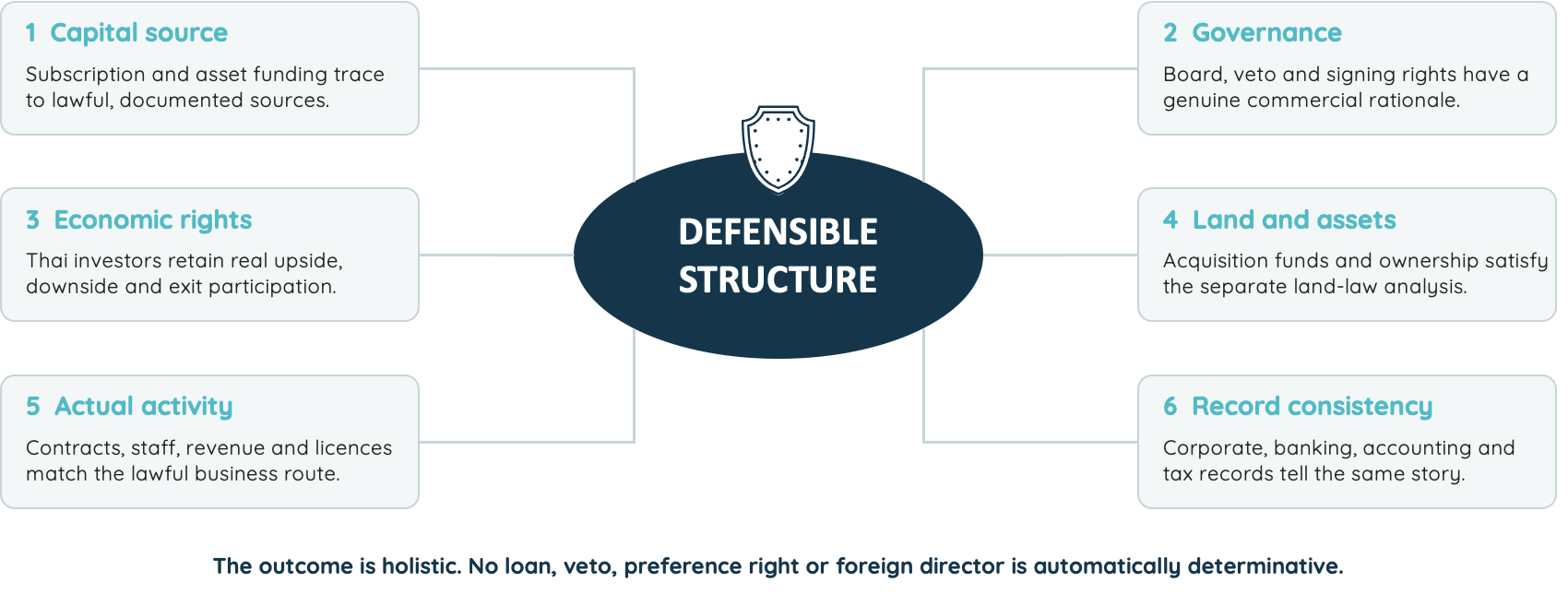
Exhibit 4. Six evidentiary dimensions support a defensible structure.
Legitimate investor protections remain available
Commercial protections do not become nominee arrangements merely because they are effective. A genuine joint venture may include board representation, reserved matters, information rights, transfer restrictions, rights of first refusal, preference rights and financing covenants. These tools can protect a minority investment without converting the minority into the true owner of the Thai shareholders’ interest.
The review should focus on the package. Rights that preserve an investment are different from terms that, viewed together, strip Thai shareholders of substantially all voting judgment, economic upside, downside risk and freedom to dispose of their shares. Drafting should also match conduct. A balanced shareholders’ agreement will not cure a practice in which Thai shareholders never invest, never receive information and act only on undisclosed instructions.
Foreign Business Act and land risks are separate
The FBA regulates who may conduct specified businesses. The Land Code separately restricts foreign ownership of land and contains its own tests for when a Thai-registered company is treated as an alien. Under Section 97 of the Land Code, the statutory tests include foreign holdings exceeding 49 per cent of registered capital or foreign shareholders comprising more than half of the shareholders. Section 96 authorizes disposal where land was acquired by a person acting as agent for an alien or covered juristic person, while Section 113 addresses acquisition as an agent for an alien.
The two regimes can overlap but should not be collapsed into one. A Thai company may satisfy the FBA definition yet face questions about land acquisition, agency or the source of purchase funds. Conversely, a company that may hold land under the Land Code can still face FBA exposure if it conducts a restricted service or other business for which foreign participation lacks a lawful route.
Property due diligence should therefore cover both ownership of the asset and operation of the business. Villas, resorts and developments often combine landholding with construction, brokerage, hospitality, rental, property management or other services. Each activity may have a different FBA treatment, while the landholding analysis remains separate.
Existing companies should reconstruct the full history
A current DBD affidavit is a snapshot. It cannot establish how the company was funded, how the property was acquired, why shareholders changed or who made decisions over time. Older structures often contain the highest evidentiary risk because the parties, advisers and accounting systems have changed.
A retrospective review should build a single chronology from incorporation to the present.
✓ Incorporation and original share subscriptions
✓ Payment of capital and source of each shareholder’s funds
✓ Asset acquisition and the flow of purchase money
✓ Shareholder loans, related-party transfers and later financing
✓ Changes in shareholders, directors and authorized signatories
✓ Governance rights, actual approvals and distributions
✓ Current contracts, revenue, staff, licenses and business activities
The review should reconcile each event across corporate records, bank statements, ledgers, tax filings and third-party documents. A discrepancy does not automatically prove a nominee arrangement, but it should be understood and, where possible, corrected through a lawful and accurately documented process.
Property-owning companies require focused diligence
For companies holding villas, development land, resorts or other property, the priority evidence usually includes the original acquisition funds; share-payment evidence; shareholder and related-party loans; land-office documents; sale, lease and management agreements; historic and current directors; voting and signing arrangements; accounts and tax treatment; and any transfer of company shares linked to a property transaction.
The company should also establish that it conducts the business reflected in its records. A dormant company that owns a residence, or a company whose only apparent activity is holding an asset for a foreign user, may require different analysis from an operating hotel or development business with staff, customers, licenses and commercial accounts. Labels do not resolve the issue; facts do.
A regulatory enquiry requires one verified response
A request from DBD, DSI, police, provincial officials or another authority should be treated as a legal and factual investigation from the outset. The company should identify the legal basis, scope, deadline and recipient of the request; preserve potentially relevant material; and appoint one response team spanning legal, corporate, accounting and tax functions.
The response should be organized around a chronology that has been tested against the underlying records. Parallel, uncoordinated explanations from directors, shareholders, lawyers and accountants create avoidable risk, especially where a difference in terminology is mistaken for a difference in fact.
| Stage | Immediate action | Control objective |
| Preserve | Suspend routine deletion and collect relevant corporate, banking, accounting, land and communications records. | Avoid loss, alteration or fragmented custody. |
| Frame | Confirm the authority’s legal basis, questions, deadline and requested format. | Answer the request actually made and protect procedural rights. |
| Reconstruct | Prepare and verify the ownership, funding, governance and operating chronology. | Resolve inconsistencies before submission. |
| Coordinate | Use one accountable response team and one fact set across advisers and witnesses. | Prevent conflicting explanations. |
| Submit | Provide accurate answers, preserve privilege where available and record what was delivered. | Create a complete and auditable response. |
| Remediate | Address identified weaknesses only through lawful, prospective and factually accurate steps. | Reduce continuing exposure without manufacturing history. |
Remediation must follow the facts
A preventive review can identify a lawful path while the company still has time to act. Depending on the facts, that path may include correcting corporate records, documenting genuine capital contributions, revising governance, separating restricted and unrestricted activities, obtaining an FBL or FBC, relying on a valid BOI, IEAT or treaty route, changing the operating model, or replacing an unsuitable landholding structure with a lawful alternative.
Historical deficiencies should never be addressed by backdating documents, fabricating payment evidence or coaching shareholders to give an account that is not true. Remediation must begin with the actual facts, preserve evidence and distinguish between a correctable administrative defect and a structure whose purpose or operation requires substantive change.
Thailand remains open to lawful foreign investment
The enforcement program is not a general bar on foreign participation. DBD’s 2025 annual report records 1,078 permissions for foreign business operations: 291 Foreign Business Licenses under Section 17, 663 Foreign Business Certificates under specific laws including investment-promotion and industrial-estate routes, and 124 certificates based on treaty or international-agreement rights.
The policy direction is also not one-way. A 2026 ministerial regulation removed selected services from the licensing requirement, including qualifying telecommunications, treasury-centre, intra-group, guarantee and petroleum-drilling services. This targeted liberalization sits alongside stricter anti-circumvention measures: lawful routes remain available, but authorities expect the chosen route to match the business and the evidence.
DBD’s public communication on 8 October 2026 likewise stressed that companies with foreign shareholders are not presumed unlawful and that legitimate foreign investment remains welcome. The compliance advantage therefore belongs to investors that identify the correct route before they commit capital and maintain records capable of proving how the structure actually works.
The new compliance question
The decisive question is no longer whether a company appears 51 per cent Thai-owned. It is whether the business, funding, control and economic rights remain legally coherent when tested against the evidence.
Boards should be able to answer five questions with documents rather than assertions: Who funded the investment? Who makes the material decisions? Who bears the gains and losses? What business is actually conducted? Which lawful route supports the foreign participation?
For legitimate investors, that discipline strengthens more than regulatory compliance. It improves governance, protects the enforceability and value of the investment, and reduces the risk that a future transaction, audit or dispute exposes a history that no one can explain consistently.
Board agenda for the next 90 days
✓ Map every Thai entity with foreign shareholding, foreign funding, foreign directors or foreign signing authority.
✓ Classify the business actually conducted under the FBA, including ancillary services and revenue streams.
✓ Run a separate land-law review for every company that owns or acquired land.
✓ Reconcile share subscriptions, loans, asset purchases and distributions to bank and accounting records.
✓ Test the combined effect of governance and economic rights, not isolated clauses.
✓ Prepare a verified chronology and a controlled evidence file before a filing or enquiry creates urgency.
✓ Escalate any historic inconsistency for privileged legal advice and lawful remediation.
About Mahanakorn Partners Group
Mahanakorn Partners Group (MPG) advises foreign investors, Thai companies, property owners, developers and multinational businesses on Foreign Business Act compliance, corporate structuring, land and real-estate matters, BOI and foreign investment, tax and accounting, regulatory investigations, dispute resolution and remediation of existing structures.
This article is provided for general information only and does not constitute legal advice. The legality and regulatory treatment of any structure depend on its particular facts and circumstances. Official English translations are provided for convenience; the Thai text prevails where legally relevant.