
Thailand is attracting larger and more complex projects. The executive challenge is no longer simply to obtain promotion, but to convert a project-specific certificate into lawful operations, dependable inputs, revenue and durable economic value.
Executive brief
CENTRAL THESIS
The useful unit of investment readiness is the operating model that can lawfully earn revenue, sustain its inputs and prove its entitlement to incentives. A BOI certificate is one component of that system.
1. Thailand’s investment pipeline has changed shape. BOI applications reached approximately THB 1.47 trillion in the first half of 2026 across 1,299 projects. Based on the BOI’s rounded figures, average stated investment per application was about THB 1.13 billion—roughly 3.5 times the first-half 2024 level—and digital projects represented approximately 76% of application value.
2. A BOI certificate is a project-specific package of rights and conditions. It does not, by itself, settle the Foreign Business Act position for every revenue stream, secure land and utilities, replace sectoral licences, clear construction or environmental requirements, release machinery through Customs, or authorize every foreign employee.
3. The compliance burden now starts earlier and moves faster. Since May 2026, promoted projects awaiting BOI permission to commence full operations must submit quarterly progress reports through e-Monitoring within 30 days after each quarter-end. Non-compliance can result in suspension of rights and benefits; two consecutive omissions may lead to consideration of revocation.
4. Execution should be governed as one system. Scope, site, permits, utilities, equipment, people, contracts, tax and evidence should converge at a defined commercial-readiness gate. A cross-functional control tower is therefore a value-protection mechanism, rather than an administrative reporting exercise.
READING THE DATA CORRECTLY
Applications, approvals, certificates, other-agency permissions and realized expenditure are separate stages. The exhibits preserve those distinctions and do not calculate a pipeline conversion rate from unmatched cohorts.
The investment problem has moved from attraction to conversion
Thailand enters the final quarter of 2026 with an unusually large investment pipeline. BOI applications in the first half reached approximately THB 1.47 trillion, 37% above the corresponding period of 2025, while digital infrastructure alone accounted for approximately THB 1.12 trillion. The number of applications fell from 1,880 in the first half of 2025 to 1,299 in the first half of 2026, even as total value increased. Capital is therefore concentrating in fewer, larger and more infrastructure-intensive projects.
This is encouraging, but an application is an expression of planned investment, not evidence that capital has been deployed or that a project can operate. BOI approval is also distinct from certificate issuance, other-agency permissions, construction completion, commercial revenue and realized investment. Those stages should never be combined into a single conversion percentage unless the same project cohort is followed over a defined period.
Thailand FastPass provides a useful window into that distinction. By 11 September 2026, the first current cohort comprised 25 projects worth more than THB 223 billion. All had received BOI promotion approval, but 11 had obtained all relevant licences or approvals within the service-level timeframe, while 14 were applying or preparing to apply. Reported actual investment exceeded THB 21 billion. A further 17 projects worth more than THB 121 billion were then added, taking the current programme to 42 projects worth more than THB 344 billion. These figures do not imply failure. They show that investment conversion depends on several agencies, workstreams and commercial decisions after promotion.
FastPass is an inter-agency acceleration mechanism. At launch, eight agencies targeted reductions of 20–50% in selected processing times involving factory permissions, Customs, environmental assessment and grid connections. It does not waive substantive law, guarantee approval or resolve a project’s private dependencies. Current participation criteria were replaced again by BOI Office Announcement Por.11/2569 on 16 September 2026, underscoring the need to verify the live rules rather than rely on an earlier programme summary.
The title’s ‘new rules’ therefore has two meanings. One is literal: Thailand introduced material 2026 changes, most notably quarterly BOI progress reporting. The other is managerial: long-standing laws now intersect with projects that are larger, more digital, more utility-dependent and more exposed to global minimum tax. An investor that manages each permit in isolation can be legally diligent and commercially late at the same time.
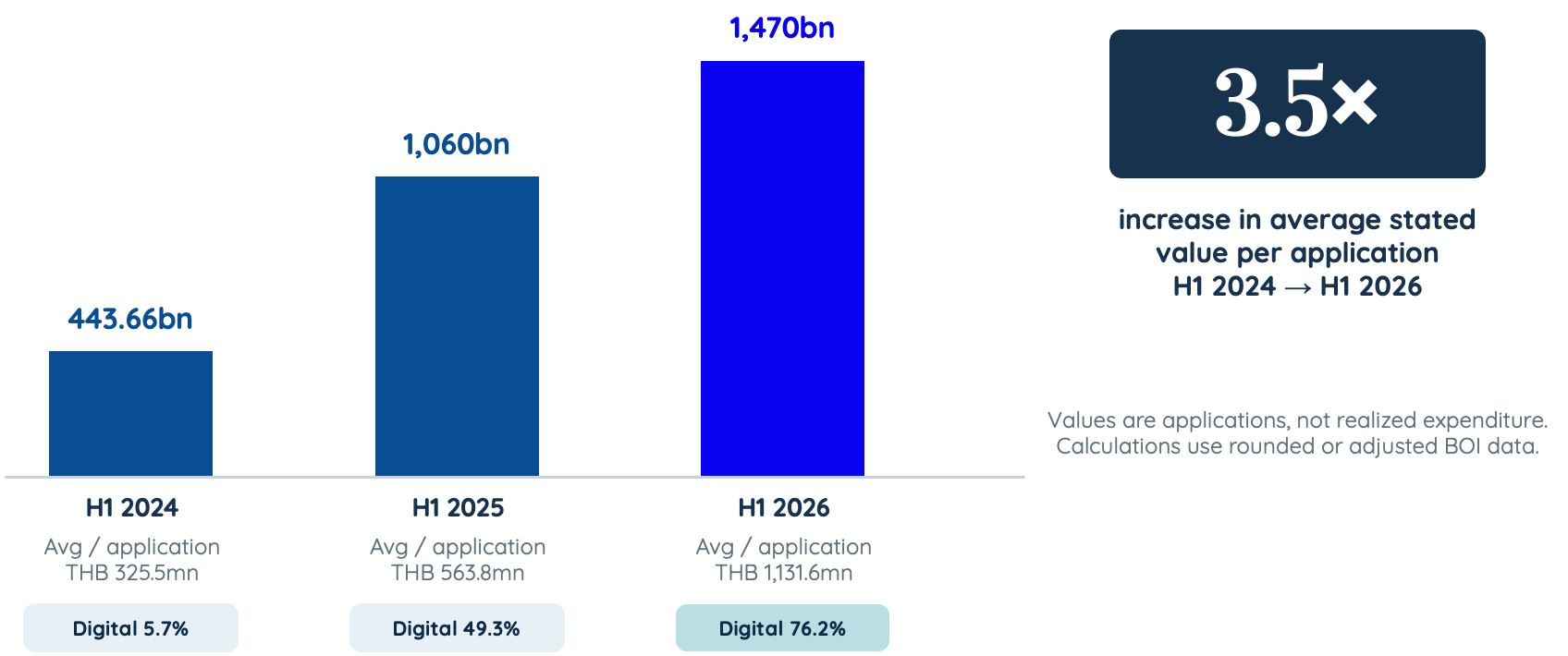
EXHIBIT 1. Applications are becoming larger and more concentrated.
Sources: BOI H1 2025 and H1 2026 releases. MPG calculations from rounded or adjusted application-stage figures.
A BOI certificate is a bounded legal instrument
The starting point is to read the certificate as a legal perimeter. The Investment Promotion Act permits conditions concerning capital, shareholders, products or services, production processes and capacity, personnel, environmental controls, machinery deadlines, commencement and reporting. Amendments to a certificate require the prescribed BOI process. The certificate can confer powerful tax and non-tax benefits, but those rights attach to an approved person, project and activity on stated conditions.
That perimeter creates two common execution errors. The first is to assume that every activity performed by the promoted company is promoted. A manufacturer may later add maintenance, installation, distribution, software subscriptions or management services. A digital operator may bundle hosting, licensing, implementation and support. Each role and revenue stream should be mapped against the promoted scope, the Foreign Business Act, sector-specific rules and the company’s constitutional objects before the commercial contract is signed.
For a foreign business promoted in an activity within List Two or List Three of the Foreign Business Act, section 12 provides a Foreign Business Certificate route through the Department of Business Development. That route is different from a discretionary Foreign Business Licence, but the certificate still follows the relevant promoted business. It should not be treated as a universal permission for unpromoted ancillary activities.
The second error is to treat a BOI benefit as a substitute for the underlying legal or physical input. BOI permission may allow a promoted foreign-owned entity to own land for the promoted activity to the extent approved, but it does not clear title, zoning, access, construction, environmental or utility issues. Machinery-duty privileges still require the relevant master-list and release procedures. Foreign-expert privileges still require approved positions, qualifications and immigration/work authorization. Promotion connects to these systems; it does not erase them.
Rule 1 — Define the revenue bundle before finalizing the legal structure
Investment applications are often prepared around an eligible activity, while the eventual commercial model is built around a customer solution. The legal gap appears when the solution contains activities that were not described, analysed or assigned to the correct entity. The risk can remain invisible until the first customer contract, intercompany charge or audit.
The solution is a one-page revenue and activity map. For every planned revenue stream, identify the contracting entity, actual functions, customer, delivery location, personnel, assets, intellectual-property flow, promoted status, Foreign Business Act position, sectoral permission and tax treatment. The map should include low-revenue activities because a small service line can create a licensing problem or weaken the accounting separation needed for an incentive claim.
This exercise should occur before the group fixes its shareholding, intercompany agreements and transfer-pricing model. It should then become a change-control tool. A new bundled service, sales channel, customer segment or group function should trigger a short legal-perimeter review before launch.
Rule 2 — Treat site selection as a licensing and input decision
The economically relevant site is the site that can lawfully and dependably support the approved process on the promised date. Title and price are only part of that decision. Investors should test permitted land use, access and easements, building route, factory classification, environmental review, industrial-estate requirements, grid capacity, connection works, water, cooling, waste treatment, telecommunications and resilience.
The order matters. A land commitment made before utility and environmental diligence can lock the investor into a site that cannot support the designed load or schedule. A better transaction structure makes acquisition or long-term lease commitments conditional on defined approvals and input deliverables, with long-stop dates, information rights, cooperation duties and exit or adjustment mechanisms. A utility discussion or preliminary proposal should not be treated as a firm connection commitment.
Data centres illustrate the point. The Government’s September 2026 policy statement identified electricity, water, land, environmental and community effects, cybersecurity, clean energy and data protection as matters for a developing framework. It did not establish a blanket nationwide operating prohibition. The prudent response is therefore current project-specific diligence, contractual flexibility and sensitivity analysis, rather than either assuming unrestricted development or declaring the sector closed.
Rule 3 — Synchronize the four clocks that govern launch
At least four clocks typically run after promotion. The BOI clock covers certificate conditions, amendments, progress reports and the full-operation approval process. The capital and Customs clock covers equipment specification, master-list approval, shipment, import periods, installation and restrictions on disposal or alternative use. The tax clock ordinarily begins with the promoted project’s first revenue or first invoice, although some measures use a different trigger. The commercial clock follows contracts, commissioning, customer acceptance, staffing and billing.
These clocks are related, but they are not interchangeable. BOI guidance states that corporate income tax exemption rights can be exercised before BOI permission to commence full operations, provided the applicable claim requirements are met. ‘Permission to commence operations’ is therefore a BOI compliance milestone, not a universal synonym for the first lawful sale. Conversely, an early invoice may start the tax-exemption period before the project reaches planned scale. For projects with long ramp-up periods, that timing can materially change realized value.
Management should approve a single integrated milestone plan showing each legal trigger, certificate-specific deadline, commercial dependency and latest safe decision date. It should distinguish facts controlled by the investor from agency decisions and third-party delivery. Generic 30- or 36-month descriptions are useful orientation, but the certificate and applicable measure govern the actual project.
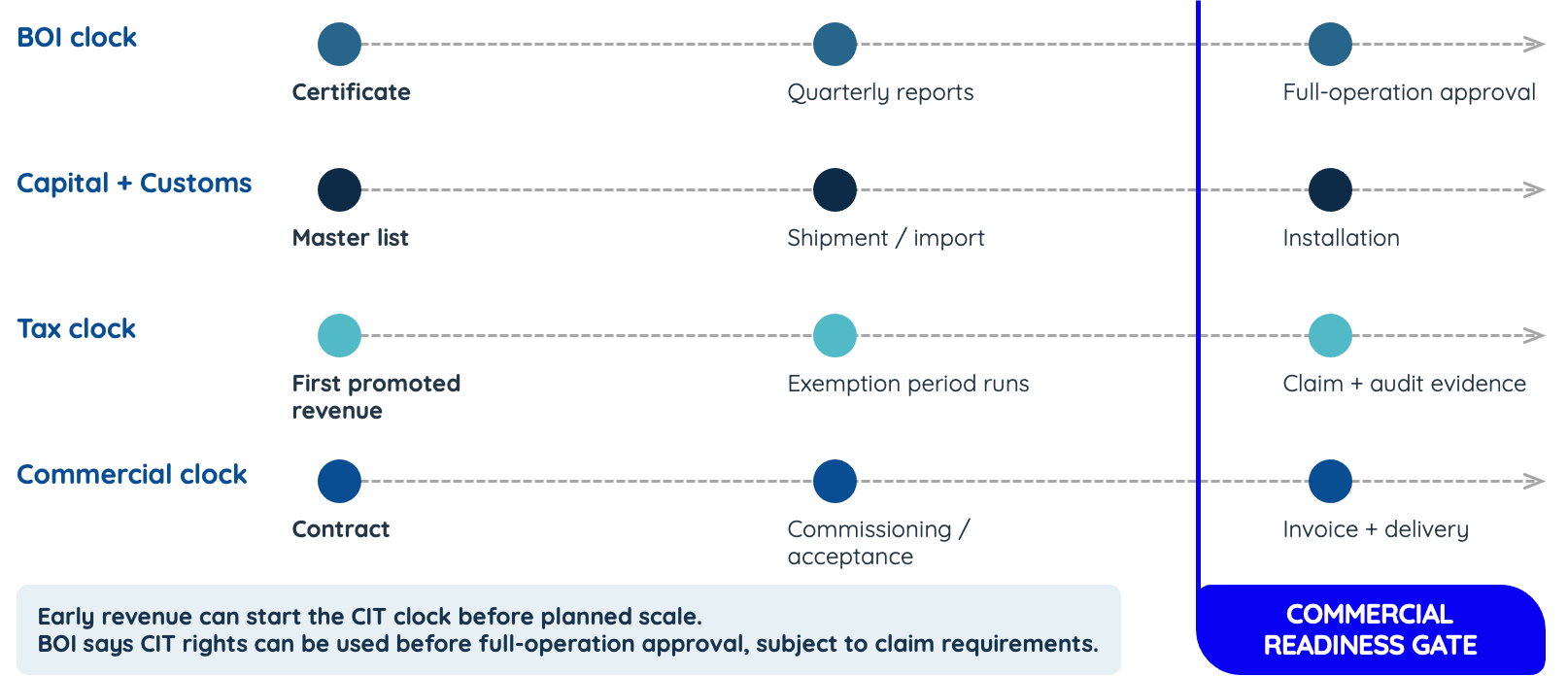
EXHIBIT 2. Four clocks govern one launch.
Sources: BOI CIT, machinery and post-promotion guidance. Events and sequence are project-specific.
Rule 4 — Model incentive value as cash flow, not a headline tax holiday
The relevant board question is the incentive value the group expects to realize after timing, caps, qualifying profit, accounting separation, implementation cost and international tax. BOI confirms that promotion operates project by project and that companies must separate revenue and expenses for each promoted project. CIT claims are made through the prescribed e-Tax process with audited compliance reporting, generally within 120 days after the end of the accounting period in which the incentive is claimed. Evidence design therefore belongs in the finance architecture before billing begins.
Thailand’s Top-up Tax Decree applies to in-scope large multinational groups for accounting periods beginning on or after 1 January 2025. It does not mean that every promoted company simply pays 15%, nor that every BOI benefit loses value. The effect depends on the group, jurisdictional effective tax rate, covered taxes, substance-based exclusions, elections, safe harbours and other rules. It does mean that the nominal duration of a local tax exemption is no longer an adequate measure for many large groups.
Investors should compare scenarios at group level: the present value of local CIT relief, any top-up tax, Customs benefits, non-tax rights, implementation costs, cash timing and operating certainty. Customs benefits should be modelled separately because they require active administration and may retain value even where minimum-tax rules reduce the group benefit of a CIT holiday. Prospective relief, including any future refundable-credit mechanism, should not be booked until the legal basis and eligibility are confirmed.
Rule 5 — Put equipment, talent and data on the critical path
A promoted project cannot operate without deployable assets and people. Procurement teams should align machinery descriptions, origin, technical specifications, shipment terms and financing with BOI and Customs procedures. Asset registers should preserve the link between approved machinery and installed equipment, and contracts should anticipate consent requirements for transfer, lease, mortgage, relocation, export or alternative use. Export-input privileges likewise require prior approval, inventory discipline and evidence that inputs were used for qualifying export production.
The staffing plan should identify which positions can be filled locally, which require foreign expertise, when each person must enter and work in Thailand, and what evidence supports the role and qualifications. BOI’s expert route does not authorize any foreign worker for any task. Current personnel rules include activity- and company-specific conditions, while a 2026 relief route for certain advanced-technology projects requires application, Thai-worker training and staged localization rather than providing a general exemption.
For digital and service projects, information flows are an operating dependency. Employee, customer and group data should be mapped across systems and borders before implementation. Applicable lawful bases, notices, processor terms, security controls, retention, breach response and transfer mechanisms should be designed into the service. Thailand’s PDPA does not impose a universal localization rule or require every business to appoint a data-protection officer, but it can materially affect architecture and contracting.
Rule 6 — Build evidence before the first transaction
The most expensive compliance evidence is evidence reconstructed after the event. The promoted scope should flow into the chart of accounts, contract templates, invoice descriptions, asset master, inventory logic, Customs records, personnel files and management reporting. A single sample transaction should be tested end to end before launch: customer contract, service or product delivery, invoice, revenue classification, project expense allocation, asset and inventory records, tax treatment and documentary retention.
The evidence register should assign an owner, source system, retention period and review frequency to each material condition. It should include the certificate and amendments, project accounts, capital and shareholding evidence, site rights, permits, machinery and raw-material approvals, environmental conditions, employment evidence, training commitments and reports. This is not paperwork added after implementation; it is part of the operating design that protects the right to use the incentive.
Rule 7 — Govern the certificate as a living compliance instrument
The 2026 reporting change makes this rule explicit. Under BOI Office Announcement Por.8/2569, projects that have received a certificate but not yet received permission to commence full operations report progress for quarters ending in March, June, September and December, within 30 days after quarter-end. A certificate issued during a quarter enters the cycle in the next reporting quarter. The notice also replaced older February/July certificate conditions.
Board Announcement 8/2569 provides that failure to comply can lead to suspension of rights and benefits, while two consecutive reporting failures may lead to consideration of revocation. The latter is discretionary, not automatic, but the consequence is serious enough to require board-level assurance. Progress reporting is separate from annual operational reporting and any certificate-specific condition.
Every certificate should therefore enter a central obligations register on issuance. The responsible executive should receive a short exception report covering due filings, capex versus plan, permits, unresolved dependencies, scope or location changes, imported assets, personnel conditions and any request for amendment. The purpose is to escalate decisions early, not to celebrate a percentage-complete score that hides critical-path exposure.
| NEW IN 2026
Progress reports are quarterly and due within 30 days after each quarter-end until BOI full-operation approval. Failure can lead to suspension; two consecutive omissions may lead to consideration of revocation. The second consequence is discretionary, not automatic. |
Different business models create different execution bottlenecks
An export manufacturer usually succeeds or fails at the interface between site and utilities, equipment and Customs, applicable factory and environmental approvals, production evidence and destination-market origin rules. The board should ask whether the exact process and bill of materials deliver both the incentive case and the intended market access. BOI eligibility does not itself establish preferential origin.
A data-centre or cloud project concentrates risk in energization, water and cooling, physical site and network resilience, evolving policy, cybersecurity and customer capacity commitments. Its decisive evidence is not simply a promotion certificate, but documented input deliverability, current regulatory analysis and contracts that allocate timing and performance risk.
A regional headquarters, IBC or treasury platform depends on activity and substance, separate agency routes, intercompany pricing, qualified people and—where relevant—Bank of Thailand authorization. BOI promotion should not be confused with Revenue Department incentive qualification or treasury permission. A digital or professional-services business faces a different issue: the next service bundle or customer segment can move beyond the promoted and permitted activity even where little new capital is invested.
The legal workplan should therefore follow the operating model. A universal permit checklist obscures the dependencies that matter most. A tailored critical path makes them visible.
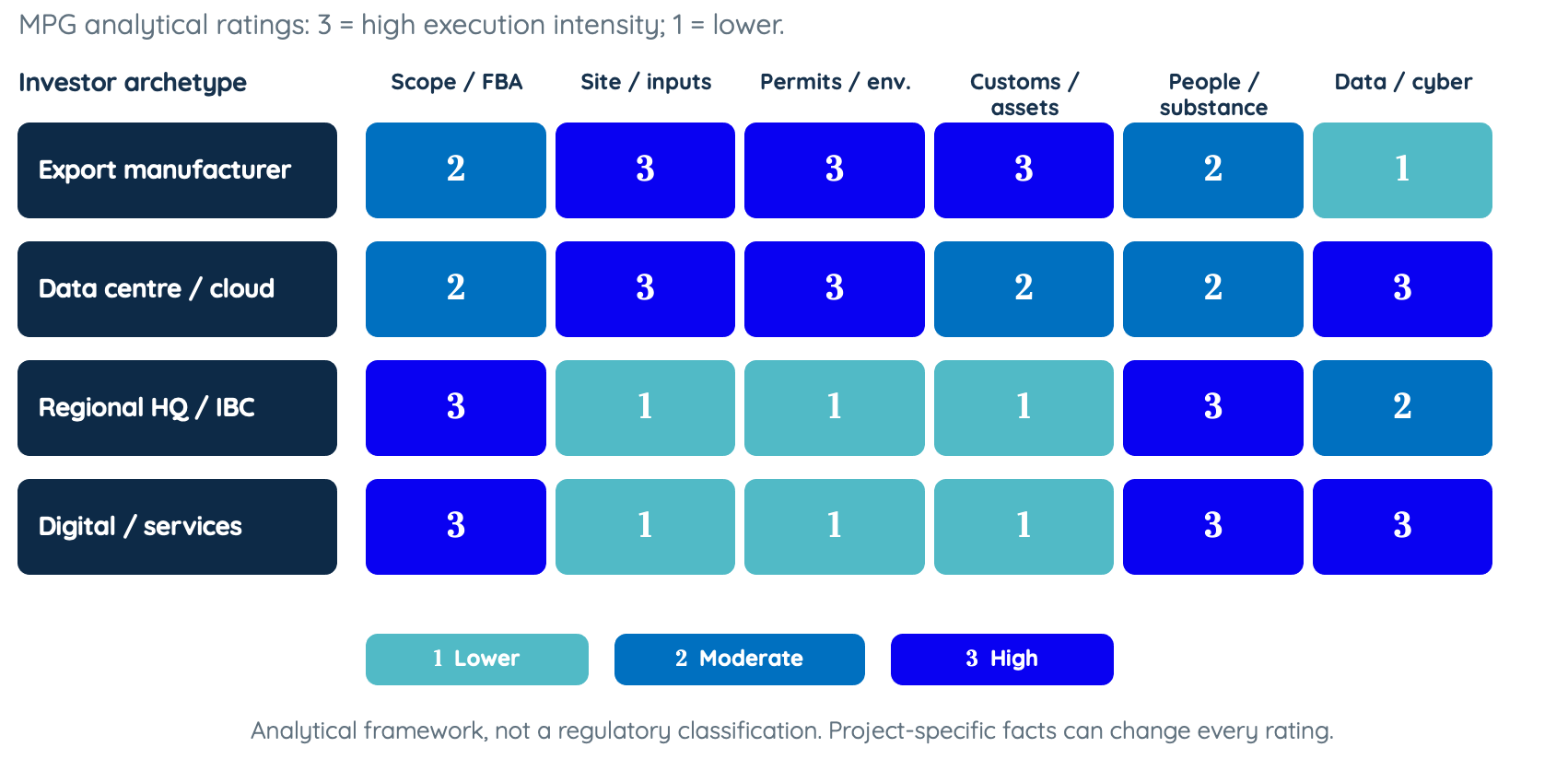
EXHIBIT 3. Execution intensity by investor archetype.
Source: MPG analytical framework. Ratings are not regulatory classifications.
The five-gate execution model
A practical control tower can organize execution around five decisions. Gate 1 confirms scope: what the Thai entity will actually do and earn, through which contracts and permissions. Gate 2 confirms location: whether the site can lawfully and physically support that operation. Gate 3 confirms deployment: whether equipment, funding and people can arrive through the intended routes. Gate 4 confirms commercial readiness: whether the business can perform and invoice the promised product or service with the required operating permissions and controls. Gate 5 protects value: whether the company can substantiate incentive use and adapt the project without drifting outside its approvals.
These are management gates, not a statutory sequence. Workstreams run in parallel and the exact order is project-specific. Each gate should have minimum evidence, an accountable owner, an exposed capital amount and a written decision. The control tower should track forecast lawful-commercial-readiness date, capital committed before unresolved prerequisites, critical-path slack, risk-adjusted incentive value and material departures from approved scope.
During deployment, a weekly decision meeting should focus on exceptions and cross-functional trade-offs. A monthly board view should show the small number of unresolved dependencies that can move the launch date or destroy value. The sponsor must have authority to reconcile commercial ambition with engineering, treasury, tax, legal, HR and technology constraints.
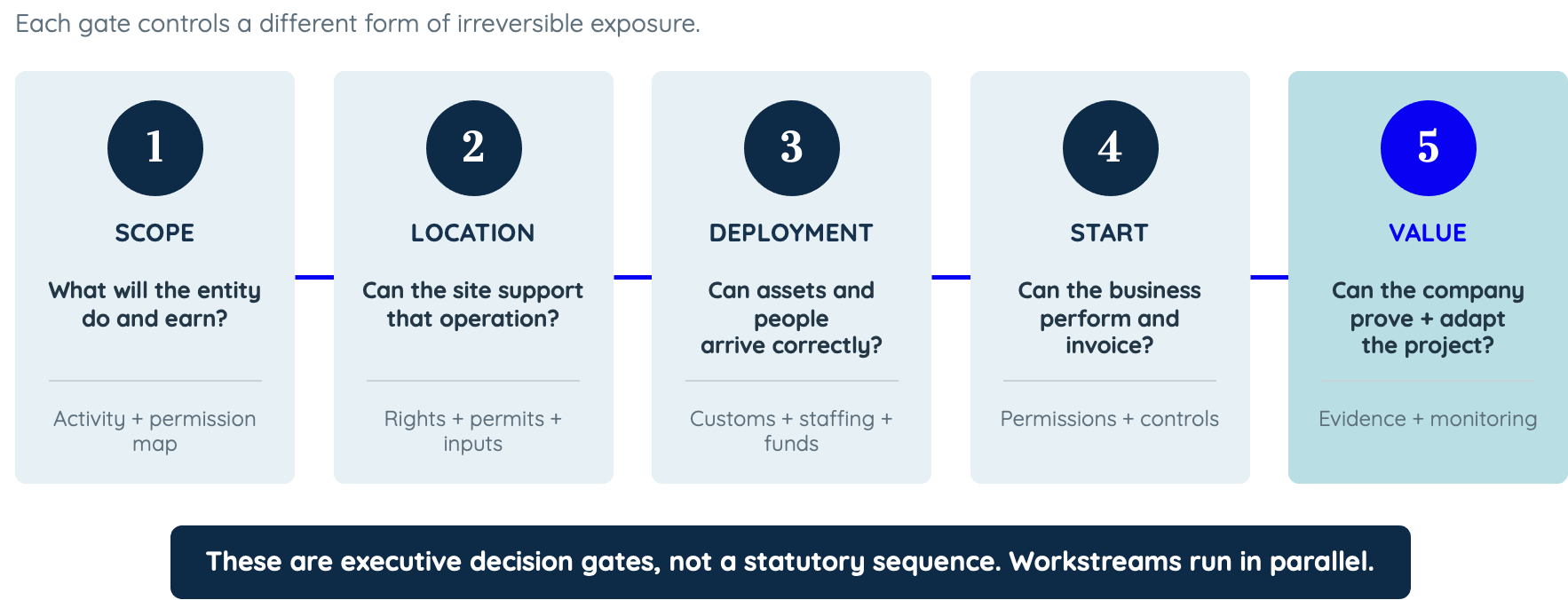
EXHIBIT 4. Five gates from promotion to performance.
Source: MPG analytical framework informed by current BOI post-promotion requirements.
What to do in the first 100 days after promotion
Days 0–30 should establish the baseline. Reconcile the approved activity, certificate conditions and financial model; complete the revenue and activity map; confirm the entity and Foreign Business Act route; open the obligations register; and identify every certificate-specific date. No material site, equipment or customer commitment should rely on an assumption that is absent from this baseline.
Days 31–60 should turn the baseline into a dependency plan. Finalize site and utility diligence, determine the building, factory, environmental and sectoral routes, align procurement with machinery and Customs processes, prepare the staffing and immigration plan, design project accounting and document the tax and top-up-tax scenarios. Allocate each dependency to an owner and record its latest safe decision date.
Days 61–100 should test readiness. Build the integrated schedule, negotiate conditions and remedies into key contracts, run a sample transaction through the accounting and evidence architecture, confirm the first quarterly report, and establish change control. The executive sponsor should then approve or defer the next material capital commitment using a single readiness paper.
This approach is demanding at the outset, but it reduces the costliest form of delay: discovering after money has been committed that the project, site, contract or evidence does not match the legal route on which the investment case depends.
From approval to performance
Thailand’s investment regime remains capable of offering significant tax, Customs, land and talent advantages. The strategic opportunity is real. The more useful measure of success, however, is the date on which a project can lawfully deliver, invoice, preserve its incentives and create the domestic value on which policy increasingly focuses.
For boards and investment committees, five questions should guide the next decision: Does the approved scope match the complete revenue model? Can the site deliver the required inputs by the contractual date? Which of the four clocks starts next, and what value does that consume? What capital is exposed to an unresolved dependency? Can the company prove compliance using information generated by its ordinary systems?
A BOI certificate answers none of those questions alone. Used within an integrated execution system, it becomes what it was intended to be: a platform for investment rather than the finish line.
How Mahanakorn Partners Group can assist
Mahanakorn Partners Group advises investors across the complete Thailand investment lifecycle, including BOI strategy and applications, corporate and Foreign Business Act structuring, tax and Customs, land and site arrangements, environmental and operating permissions, employment and immigration, data and technology matters, contract implementation, compliance and dispute resolution. MPG’s lawyers work alongside tax advisers, accountants and auditors to align the approved project with the operating model, build an integrated critical path and preserve value after the certificate is issued.
Five questions for the next investment-committee paper
1. Does the approved scope match the complete revenue and delivery model?
2. Can the selected site lawfully and dependably deliver the required inputs by the contractual date?
3. Which legal, Customs, tax or commercial clock starts next, and what value does that consume?
4. What capital is exposed to an unresolved prerequisite, and what is the latest safe decision date?
5. Can the company prove compliance using information generated by its ordinary systems?