
Thailand and its ASEAN neighbors offer substantial opportunities for infrastructure investment. The legal work that makes a project financeable begins with the public authority’s powers and the procurement route, continues through the allocation of revenue and construction risk, and extends to the enforcement of payment and dispute remedies. Availability payments can support projects with uncertain user revenues, but their effectiveness depends on lawful public commitments and measurable service obligations.
The investment opportunity and its limits
The scale of Southeast Asia’s infrastructure requirement remains substantial. In August 2026, the Asian Development Bank reiterated that ASEAN needs at least USD 210 billion in infrastructure investment annually. That estimate describes investment needs. It should not be presented as committed funding, a procurement pipeline or the value of contracts available to private bidders.
Thailand’s State Enterprise Policy Office reported in June 2026 that the revised Public Private Partnership Project Delivery Plan for 2020–2027 contained 146 proposed projects with an indicative aggregate value of THB 1.06 trillion. At the same meeting, the PPP Committee approved a proton therapy centre at Thammasat University Hospital, Laem Chabang Port’s A5 terminal, and the Bang Prong expressway rest area project. The three reported investment values total THB 8,285 million. Committee approval is a distinct milestone from contract award, financial close and expenditure.
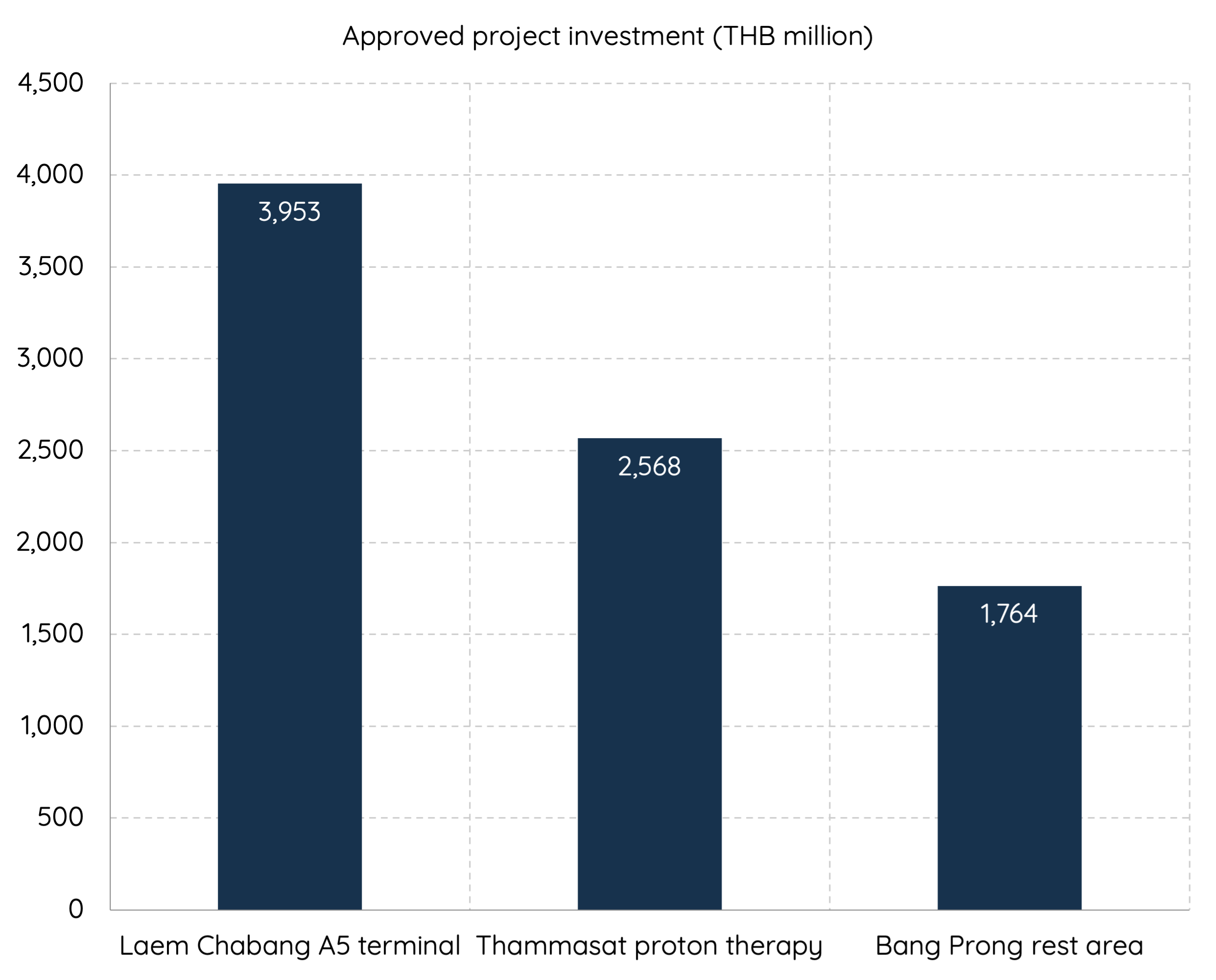
Figure 1. Approved Project Investment.
The broader transport program illustrates why these distinctions matter. The Office of Transport and Traffic Policy and Planning’s March 2026 action plan identified 34 projects with an aggregate investment envelope of THB 1,318,328 million. Its categories describe targeted milestones during fiscal year 2026. They include publicly procured projects and should not be treated as a count of PPP transactions. Nor should this envelope be added to the SEPO pipeline, because the populations may overlap.
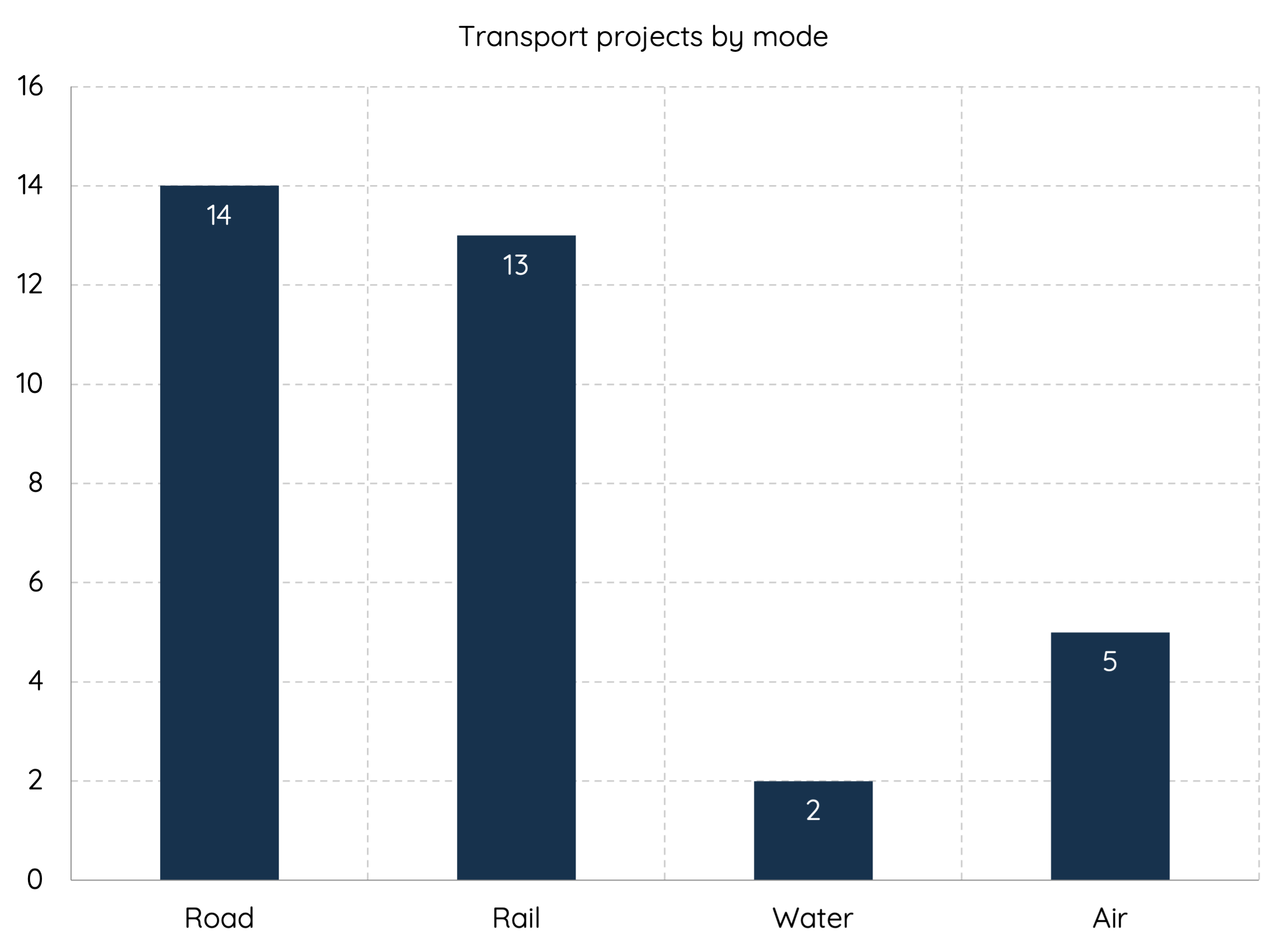
Figure 2. Transport Projects by Mode.
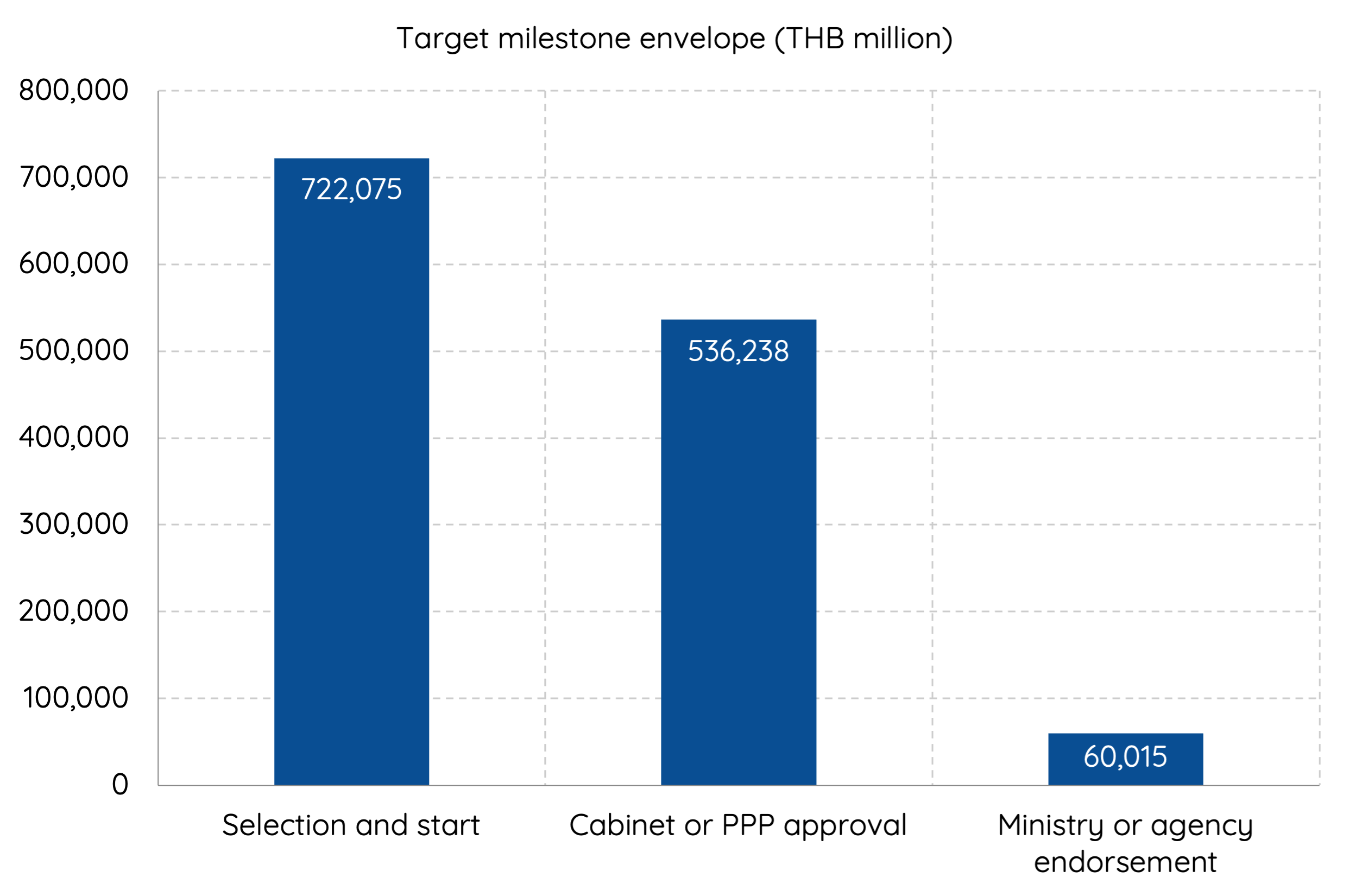
Figure 3. Target Milestone Envelope.
For sponsors, contractors and lenders, the immediate task is therefore to identify a project’s actual stage and legal structure. An announced investment opportunity may still depend on land acquisition, environmental assessment, project approval or a change to the financing model. A serious assessment distinguishes those dependencies from a binding public obligation to procure or pay.
The Thai legal route
Thailand’s Public-Private Partnership Act B.E. 2562 (2019) covers specified infrastructure and public services. Sections 8 and 9 distinguish projects valued at THB 5 billion or more from smaller projects governed by Committee notifications. The Committee can require qualifying smaller projects to follow the Act’s full procedures. A project valued at exactly THB 5 billion falls within section 8.
The threshold is an entry point to the procedural analysis. Counsel must also establish the project owner’s statutory powers, the activities involved and the applicable valuation rules. A private construction contract does not become a statutory PPP merely because it concerns infrastructure. Conversely, describing an arrangement as a lease or concession does not resolve its classification. The legal analysis must address the rights and responsibilities that the transaction actually grants.
The ordinary statutory route comprises feasibility and project approval, competitive selection, scrutiny of the negotiated agreement by the Office of the Attorney General, and the prescribed ministerial and Cabinet approvals before signature. Bidding is the default. Exceptions require the relevant approvals. A supervisory committee subsequently monitors performance, and amendments follow a separate statutory route.
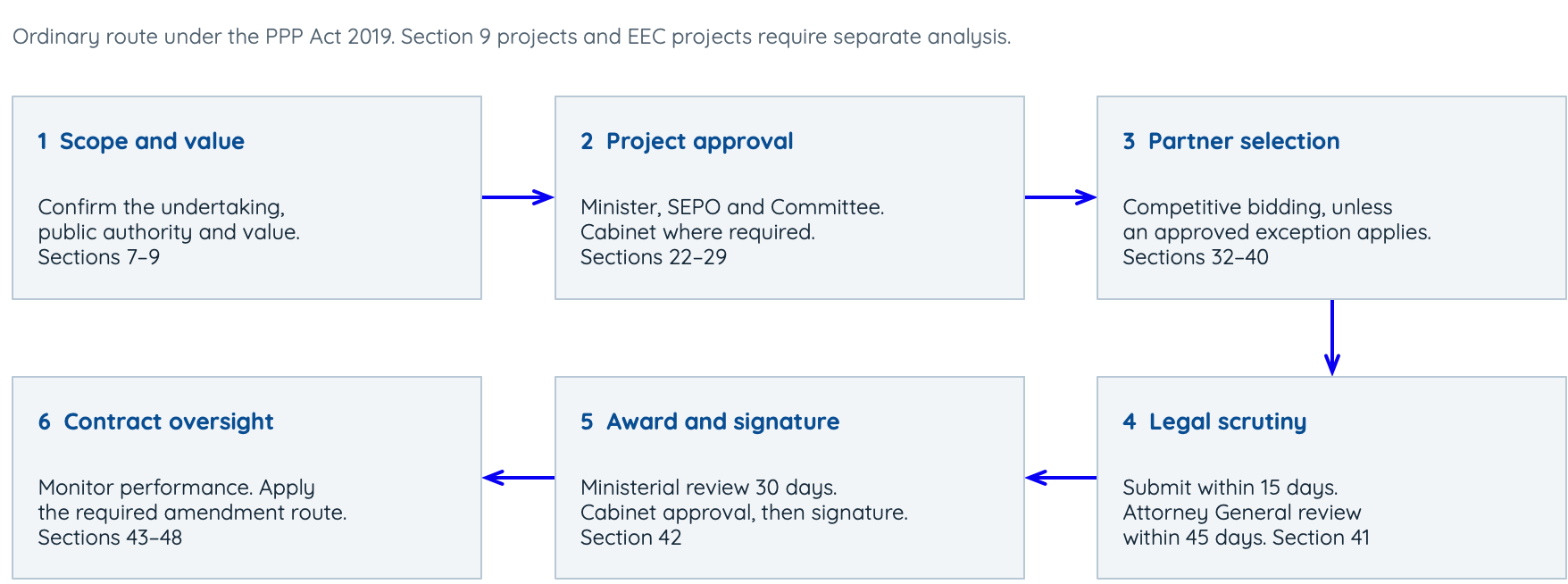
Figure 4. Thai PPP Approval and Delivery Process.
These steps have commercial consequences. Bid teams should identify which contract terms and support measures have approval, what remains negotiable, and which changes would require renewed consideration. A change to the concession’s economic terms can affect its public law basis as well as the parties’ agreement. The procurement timetable should include the time needed to resolve those issues, rather than treating legal review as a formality at the end of negotiations.
Projects within the Eastern Economic Corridor require a separate examination of the EEC legislation and relevant notifications. The EECO publishes its own rules for PPP or private investment procedures, market sounding and tender documentation. The general PPP process should not be applied mechanically to an EEC project without first establishing the governing route.
Availability payments and public affordability
A PPP’s delivery model and its payment mechanism answer different questions. An arrangement covering design, construction, financing, operation and maintenance (DBFOM) combines responsibilities over the asset’s life. The private partner may receive user-charges, government payments, or a combination. Under an availability mechanism, payment principally depends on providing the asset or service to the agreed standard. Under a user-charge concession, revenue normally depends more directly on demand and the applicable tariff. Singapore’s Ministry of Finance handbook explains how output specifications and payment incentives support a long term service arrangement.
This distinction is particularly useful for hospitals, schools and transport assets whose public value exceeds their ability to generate predictable user revenues. If government retains traffic revenue and pays for road availability, the private partner can still carry substantial construction and operational risk. The payment mechanism should define when service becomes available, how performance is measured, and which failures produce deductions. Responsibility for an event should be considered before the contract imposes its financial consequence.
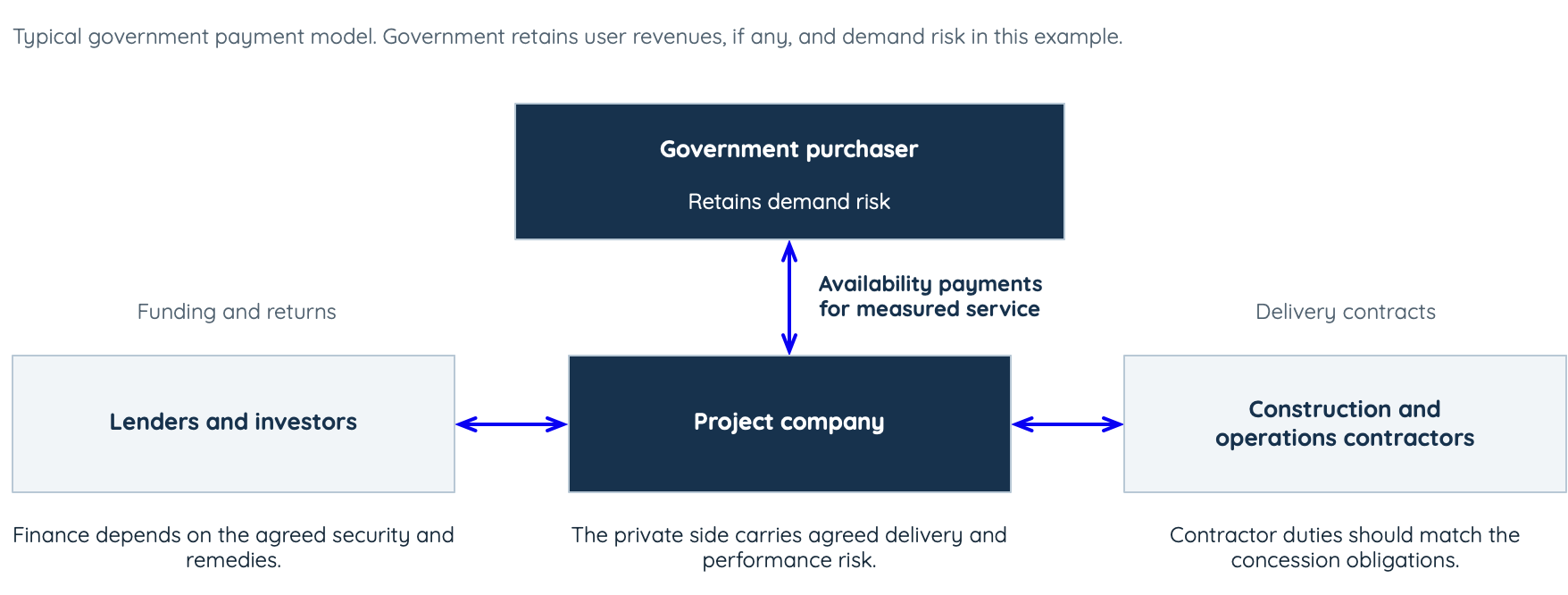
Figure 5. Availability Payments and Project Risk.
Availability payments also create public financial obligations. The World Bank distinguishes direct commitments, including availability payments, from contingent commitments such as certain guarantees and termination payments. A stable contractual payment stream does not itself establish that an authority has lawful funding, that the obligation is backed by a sovereign guarantee, or that it receives a particular accounting treatment.
Affordability and value for money require separate decisions. A procurement structure may offer an efficient allocation of lifecycle costs yet exceed the public purchaser’s sustainable budget. The appraisal should examine annual payments and their present value, alongside inflation, foreign exchange exposure and contingent liabilities. The World Bank’s fiscal appraisal guidance expressly recognizes that an economically viable PPP can still be unaffordable.
The parties should test the payment mechanism against realistic operational events. A maintenance closure, a failure affecting only part of the facility, and a government instruction to suspend service should not be left to an undifferentiated deduction clause. Cure periods, verification rights and the treatment of disputed deductions need to preserve the public purchaser’s service remedy while making the consequences sufficiently predictable for lenders to assess. These are transaction design choices, subject to the applicable law and approvals.
The permissions and security behind financial close
Financial close requires the project documents to match the asset and revenue rights that the public authority can lawfully provide. The due diligence should establish land ownership or use rights, access to each necessary parcel, responsibility for utilities and resettlement, and the conditions attached to sector licenses. The financing schedule should identify which matters must be completed before drawdown and which can be managed through staged access and enforceable remedies for delay.
Foreign participation also requires an activity specific review. Thailand’s Foreign Business Act lists architecture, engineering and certain construction and service businesses among restricted activities, subject to its exceptions and other applicable routes. BOI promotion may support a certificate route for authorized activities, but neither a PPP award nor promotion should be treated as a general exemption for every service performed by the project company or its contractors.
Environmental approval deserves its own workstream. The project team should establish whether the proposed development requires an IEE, EIA or EHIA, identify the relevant decision and conditions, and verify them against the project’s final scope. ONEP’s assessment database distinguishes report submission from approval and other review statuses. An entry showing a report has been received is insufficient evidence that environmental review is complete.
Lenders will also need a clear account of the assets and rights available as security. A charge over shares, project accounts or contractual receivables is commercially different from security over land or public infrastructure. The security analysis should identify perfection requirements, restrictions on transfer, government consent and the consequences of enforcement. A lender’s proposed replacement operator must satisfy the applicable procurement, concession and licensing requirements.
A direct agreement can coordinate lender notices, cure opportunities and substitution before the public authority terminates the concession. It must fit the authority’s legal powers and the approved contract. Counsel should distinguish the project company’s promise to repay its debt from the public purchaser’s promise to pay for services. Public ownership of a contracting entity does not, by itself, establish a government guarantee. UNCITRAL’s PPP materials identify authority, coordination and the legal framework for project contracts as foundational issues.
Contractual allocation of delivery risk
The central drafting task is to translate each material risk into an obligation, an evidential requirement and a remedy. The Global Infrastructure Hub’s risk allocation tool starts from the allocation that the parties can manage and finance in the particular transaction. Wholesale transfer of a risk that bidders cannot investigate or control can increase prices or deter credible bids.
Land access provides a practical example. A construction program based on full access at commencement will fail as a contractual planning tool if the authority expects to release the site in stages. The agreement should identify the parcels and dates, specify the information on which the contractor may rely, and deal separately with time and demonstrable cost consequences. The contractor’s own access obligations and mitigation duties should be equally clear.
Ground conditions, design development and interfaces require the same discipline. A geotechnical baseline can identify the conditions priced by bidders. The contract should establish how a departure from that baseline is proved and who decides its consequences. Where civil works, railway systems and rolling stock sit in separate packages, the documents should allocate integration testing and completion responsibility. A broad obligation to cooperate will rarely answer a dispute about which package prevented opening.
Inflation and extraordinary events require careful treatment. An increase in input prices should be assessed against the contract’s price adjustment provisions and governing law. Force majeure, change in law and authority breach clauses address different events and may provide different relief. Drafting should separate entitlement to additional time, reimbursement and prolonged event termination, while dealing expressly with insurance proceeds and mitigation. The World Bank’s contractual guidance provides a useful comparative framework, rather than a substitute for domestic law.
Where the construction package uses a FIDIC form, the particular conditions deserve as much attention as the general conditions. FIDIC’s Golden Principles emphasize the form’s balance of risk and the clarity of amendments. A contract described as FIDIC based may redistribute material duties through its schedules and amendments. The project team should review the resulting allocation, including the claims machinery, as a complete contract.
Managing change and preserving claims
A concession, its construction contract and its operating agreement need compatible rules for the events that affect more than one document. If the public purchaser approves a change to service standards, the project company needs a workable mechanism for implementing it with its contractors. The approval should address the effect on construction cost, financing, operating cost and the completion program. Contractual alignment requires deliberate drafting where the parties, duties and remedies differ.
In Thailand, amendments to a statutory PPP agreement engage sections 46–48 of the PPP Act. Changes affecting approved principles or essential terms can require further Committee and Cabinet consideration. An instruction from an operational representative should therefore be checked against that person’s authority and the required approval route. Commencing work on an assumed agreement to settle its price later can create both an evidential problem and a public law problem.
During delivery, the parties should maintain a contemporaneous record of instructions, notices, program updates, payment certificates and mitigation. A delay claim needs evidence connecting an event to its effect on completion. A cost claim needs records supporting the expenditure and the contractual basis for recovery. A global statement that the project became more difficult seldom resolves causation, responsibility or quantum.
A standing dispute board or an agreed independent expert can address technical disagreements before they interrupt service or financing. Its mandate should distinguish interim binding decisions from recommendations, identify any notice required to challenge a decision, and explain how unresolved matters proceed to final determination. The parties should also specify payment of undisputed sums and assess the lawful conditions for suspension. Neither a foreign statutory payment regime nor a proposed domestic reform should be assumed to apply.
Termination and handback
Early termination provisions should distinguish authority default, private partner default and events outside either party’s control. Each category needs a clear payment methodology, valuation date and treatment of outstanding debt, equity, insurance proceeds and amounts already received. Lenders should test the payment assumptions against the debt documents. A commercial expectation of debt recovery must not be presented as an unconditional legal entitlement. The World Bank’s contractual guidance addresses termination events, compensation and handback as separate drafting subjects.
Mandatory public powers also matter. Section 50 of Thailand’s PPP Act provides powers, with Cabinet approval, to intervene, amend or terminate in specified public interest circumstances. It provides for fair compensation where the relevant cause is not attributable to the private contractual party. Counsel should examine the relationship between these powers and the negotiated remedies.
At scheduled expiry, an asset’s operating condition can be as important as its original completion standard. The handback provisions should define residual life and maintenance requirements, inspection rights and the remedy for deficiencies. Planning should begin early enough to fund corrective work and arrange continuity of service. Data, licenses, operating records and training may require transfer alongside the physical asset.
Dispute clauses and enforcement
Dispute resolution provisions should identify the governing law, the seat of arbitration, the institution and rules, the tribunal’s composition and the language. The law governing the arbitration agreement also merits express consideration. Related contracts should be reviewed for compatible provisions, but consolidation and joinder require a proper legal basis. Commercial involvement in the project does not alone establish consent to arbitrate.
Multi tier clauses need objective escalation requirements. A written dispute notice can start a defined negotiation period, followed by mediation or arbitration under identified rules. The clause should address refusal to participate, urgent interim relief and preservation of limitation periods. Commencing negotiations should not be assumed to suspend a statutory time limit.
The consequence of failing to complete a preliminary step depends on the clause and the applicable law. In International Research Corp v Lufthansa Systems [2013] SGCA 55, the Singapore Court of Appeal examined the parties’ consent and the stipulated escalation process. More recent discussion of C v D [2023] HKCFA 16 distinguishes objections to the admissibility of a claim from objections to the tribunal’s jurisdiction. These authorities do not support a universal proposition that every missed negotiation step invalidates an arbitration.
For a Thai public contract, section 15 of the Arbitration Act B.E. 2545 (2002) recognizes arbitration agreements involving a state agency, including administrative contracts. The project still requires a review of the public party’s authority and applicable governmental approval requirements for the proposed clause. Choosing an offshore seat does not remove mandatory Thai rules or settle questions about the character of the underlying public contract.
The New York Convention provides an important framework for recognition and enforcement of foreign awards. UNCITRAL’s status table records participation across ASEAN, including Timor-Leste’s accession in 2023. Enforcement nevertheless remains subject to Convention defenses and local procedure. The intended enforcement jurisdiction, available commercial assets and any immunity from execution should be assessed before a dispute arises. Consent to arbitration and immunity from execution are separate legal questions.
Financial distress and continuity of service
Financial distress can leave a project with several competing timetables. The contractor may face insolvency proceedings while the project company seeks replacement capacity and lenders consider their security. A contractual termination right must be examined alongside any applicable moratorium, restrictions on enforcement and the rights of an insolvency officeholder. The immediate priorities are a lawful route to preserve service, access to project information and a reliable account of unpaid obligations.
SIAC’s Restructuring and Insolvency Arbitration Protocol took effect on 26 August 2025 and applies by agreement. It adapts arbitration procedure for restructuring and insolvency related disputes. Its potential value lies in resolving an arbitrable dispute efficiently within the wider restructuring, rather than replacing the collective insolvency process.
Use of the Protocol requires a jurisdiction specific assessment of arbitrability, consent and any necessary court permission. It cannot make non-arbitrable matters arbitrable, displace a mandatory stay or bind creditors who have not consented merely because the contracting parties chose it. A debt determination may assist a restructuring, but the treatment and priority of the resulting claim remain questions for the applicable insolvency regime. SIAC’s accompanying guidance should be read with those domestic rules.
ASEAN investment requires national legal analysis
ASEAN admitted Timor-Leste as its eleventh member on 26 October 2025. Regional integration supports connectivity and investment cooperation, but membership does not create a single PPP procurement or concession regime. The sponsor must establish the national approval, land, licensing and enforcement position in each jurisdiction.
The Philippines has a national PPP Code under Republic Act No. 11966, with implementing rules effective from 6 April 2024. It provides a framework for national and local projects and distinct routes for solicited and unsolicited proposals. Its rules on government undertakings, approvals and contract variation need to be addressed when the project is structured. An unsolicited proposal should not be modeled on the assumption that every form of public support available to a solicited project will also be available to it.
Indonesia’s Presidential Regulation No. 38 of 2015 remains a central reference for cooperation between government and business entities in infrastructure provision. Bappenas publishes a PPP Book distinguishing projects by preparation and transaction status. The existence of a project in that publication should prompt verification with the government contracting agency of its current readiness and proposed support. A financing model should identify the specific payment undertaking or guarantee on which it relies.
Vietnam’s framework requires particular attention to amendments and transition rules. The 2020 PPP Law has been amended through Laws No. 57/2024/QH15 and No. 90/2025/QH15. Decree No. 243/2025/ND-CP addresses implementation, including approval procedures. In April 2026, Resolution No. 16/2026/NQ-CP introduced measures for specified transitional build transfer projects. A legacy contract and a new procurement may therefore require different analyses. Neither historical revenue sharing parameters nor an earlier approval process should be carried forward without checking the current rules and the project’s transition position.
Malaysia’s PIKAS 2030 sets policy direction for its PPP program, while UKAS publishes implementation guidance, including the PPP 3.0 framework. The distinction between policy, legal authority and an executed government obligation remains material. Singapore’s Ministry of Finance handbook provides an established reference for structuring and managing PPPs, with procurement and sector law remaining relevant. Neither country’s guidance should be described as an ASEAN wide PPP code.
The other member states also have their own starting points. Cambodia’s 2021 PPP Law replaced its concession law framework. Lao PDR publishes Decree No. 624 of 21 December 2020. Brunei’s Ministry of Finance provides PPP guidelines and a submission checklist. Timor-Leste’s framework includes Decree Law No. 42/2012 and its amendments, alongside project specific legislation. These materials support an initial legal map, but each transaction needs a current local review of subordinate measures and public authority powers.
Myanmar requires a particularly careful assessment of counterparties, payment channels and the law applicable to the investor and its lenders. Its Project Bank Notification No. 2/2018 provides a reference for project preparation, but it does not establish that a proposed transaction is currently financeable or permitted. Sanctions screening must examine ownership and control, the particular activity and the relevant jurisdictional connections. Current sanctions sources should be checked at the transaction date.
Cross border infrastructure and the investment decision
Regional power interconnection demonstrates the additional legal work required for a project that crosses borders. The ASEAN Power Grid Financing Initiative launched in October 2025 seeks to support regional electricity connectivity. The IEA’s October 2026 implementation framework examines domestic conditions alongside cross-border cooperation across governance, regulation, technical matters and commercial arrangements. Infrastructure finance needs those arrangements to operate together.
For an interconnector, counsel should map generation, export, transit and import permissions, grid access and settlement. The agreements should address curtailment, metering, outages and the consequences of regulatory change in each relevant state. A default or force majeure event under one agreement should have a considered consequence under the others. A regional memorandum of understanding does not itself confer the complete set of rights required to build, operate and receive payment.
A sound investment decision should establish who may promise what, the approvals that support that promise, and the evidence that will demonstrate performance. The financial model must then reflect the same allocation of risk as the concession, construction and financing documents. During delivery, authorized changes and disciplined records preserve that allocation. These measures give Thailand’s and ASEAN’s infrastructure ambitions a stronger basis for attracting capital and sustaining public services.
This article provides general legal analysis as at 29 October 2026, with Thailand as the principal jurisdiction and selected comparisons across ASEAN. It is not a transaction specific legal opinion. Official language legislation prevails over English translations. References to guidelines, model provisions and drafting practices do not imply that they are binding domestic law.