
Thailand’s Board of Investment has amended the promoted business categories and conditions for data-center activities. The relevant BOI notification, published in the Royal Gazette on 5 June 2026, updates conditions for high-energy-efficiency data centers and other data-center activities under the BOI investment promotion framework.
For high-energy-efficiency data centers, the conditions include, among other things, a Power Usage Effectiveness (PUE) requirement not exceeding 1.3 before exercising corporate income tax privileges, minimum IT load, high-speed telecommunications infrastructure, concurrently maintainable systems, continuous-rated engine generators, UPS and cooling redundancy, independent distribution paths, fire protection, 24-hour security, ISO/IEC 27001 certification, a water-management plan, a plan to create benefits for Thailand and Thai workforce requirements for management or specialist positions within a specified period.
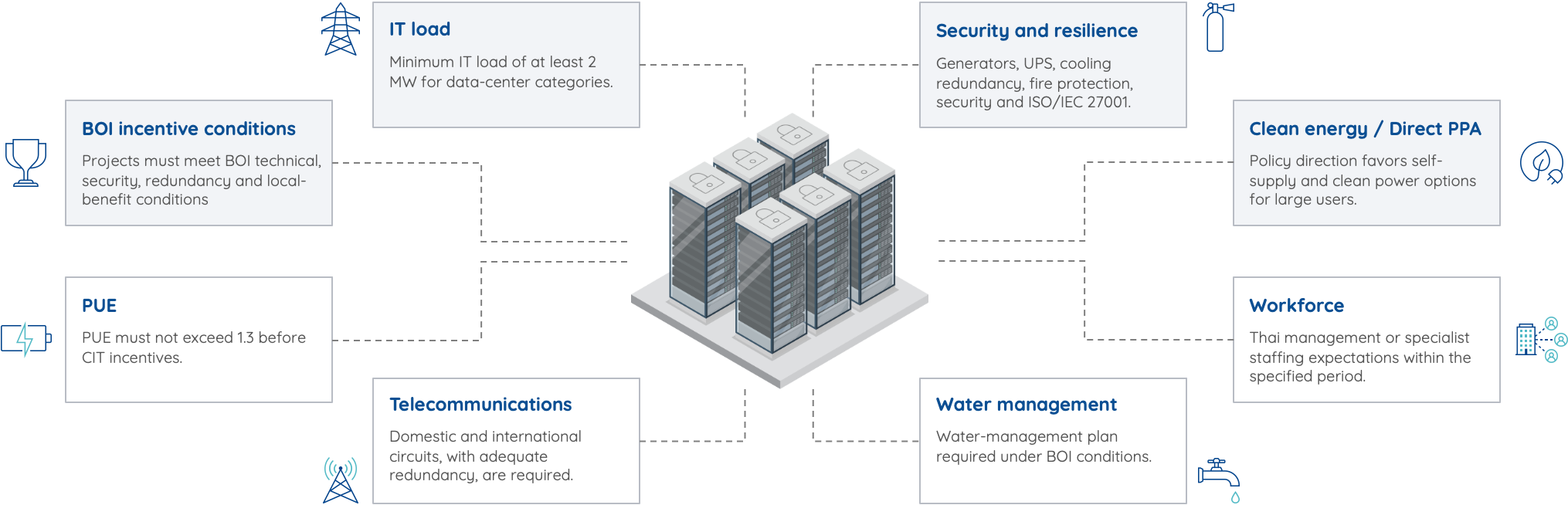
Figure 1. Critical Regulatory and Infrastructure Considerations for BOI Data Center Projects.
Separately, on 19 June 2026 the Government announced that Thailand remains open to quality digital investment, but emphasized the need to manage energy, water and community impacts. The Government indicated that data-center investors may be allowed to invest in their own clean-energy supply, and that electricity access for data-center projects may be reviewed through a dedicated BOI subcommittee. Energy-policy reporting has also pointed to possible Direct PPA expansion, differentiated tariffs for data centers and stronger completion safeguards for large projects.
Legal and Commercial Analysis
The legal point for investors is that data centers are no longer assessed only as digital infrastructure projects. They are increasingly treated as strategic, resource-intensive assets. This has consequences for BOI promotion, electricity procurement, grid connection, water use, land selection, environmental permitting, construction timelines and long-term operating cost.
BOI incentives remain important, particularly for projects that can satisfy technical, security, resilience and local-benefit criteria. However, the practical approval pathway now requires a more integrated development strategy. A data-center investor should be able to explain where its power will come from, whether clean energy is available, how water consumption will be managed, how the project will avoid community impact, whether the site has sufficient telecommunications redundancy and how Thai workforce development will be delivered.
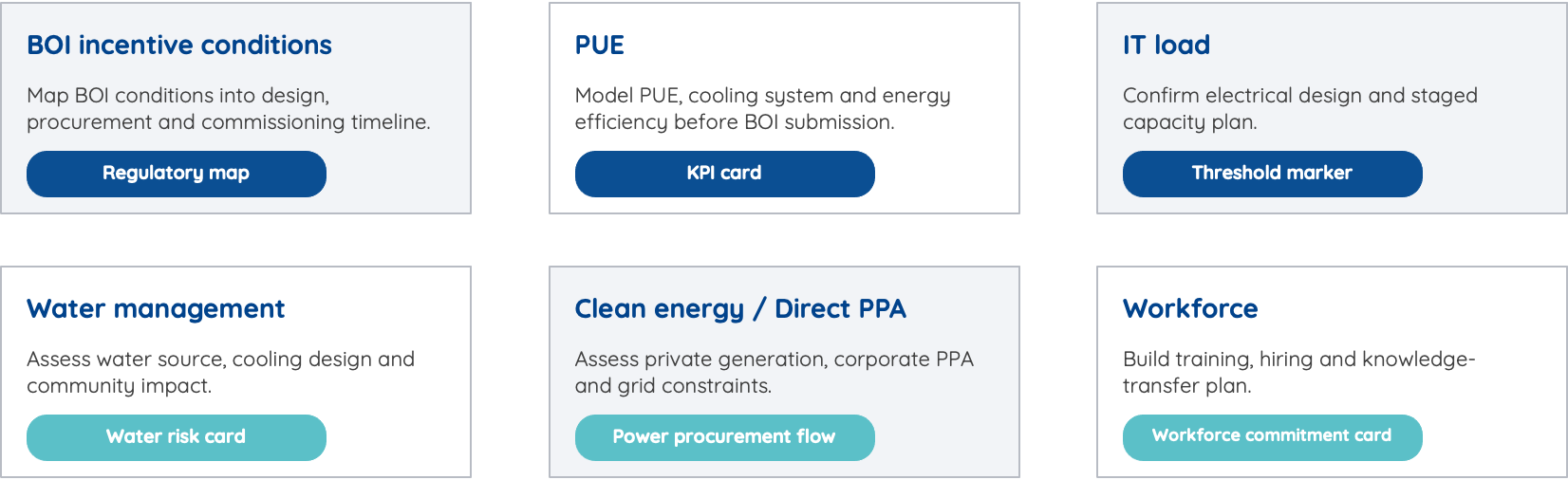
Figure 2. Key BOI Data Center Investment Requirements.
The possible expansion of Direct PPAs is especially relevant. If large electricity users can procure clean power more directly, data centers may be able to address both sustainability commitments and grid-capacity concerns. However, Direct PPA structures raise legal issues around generation licensing, grid wheeling, tariffs, credit support, project bankability, BOI conditions and allocation of regulatory-change risk.
The message to the market is not that Thailand is closing the door. It is that the door is becoming more selective. Projects that combine BOI eligibility, credible power strategy, clean-energy procurement, water stewardship, security standards and local workforce commitments will be better positioned than projects that rely solely on tax incentives.
| Regulatory Theme | Investor Question |
| BOI eligibility | Can the project satisfy PUE, IT load, security, redundancy and local-benefit conditions? |
| Power access | Is grid capacity available, and will tariffs or user categories change for data centers? |
| Clean energy | Can the project use self-generation, Direct PPA or other clean-power procurement? |
| Water and community impact | Is there a credible water-management and stakeholder strategy? |
| Workforce | Can the operator meet Thai management and specialist workforce expectations? |
Practical Client Action Points
✓ Conduct site due diligence covering grid access, water availability, land use, telecommunications redundancy and permitting.
✓ Map BOI conditions into the project development schedule before submitting the investment promotion application.
✓ Develop a clean-energy and power-procurement strategy, including Direct PPA feasibility where appropriate.
✓ Prepare a water-management and community-impact narrative for regulators and stakeholders.
✓ Build Thai workforce development, training and knowledge-transfer commitments into the investment plan.