
|
Key takeaway: From 3 July 2026, Thai medical practitioners advertising beautification or cosmetic-enhancement services may use a nickname in the advertisement, but only if it appears in the same area as the practitioner’s real first name and surname and uses lettering of the same color, style and size. |
Overview
On 2 July 2026, the Royal Gazette published Medical Council Notification No. 17/2569 regarding advertising on beautification or cosmetic enhancements of medical practitioners (No. 2) B.E. 2569 (the Amendment). The Amendment was signed on 18 June 2026 and became effective on 3 July 2026, the day after its publication in the Royal Gazette. It amends Clause 6 of Medical Council Notification No. 39/2567 (the Original Notification), which was published in the Royal Gazette on 9 July 2024.
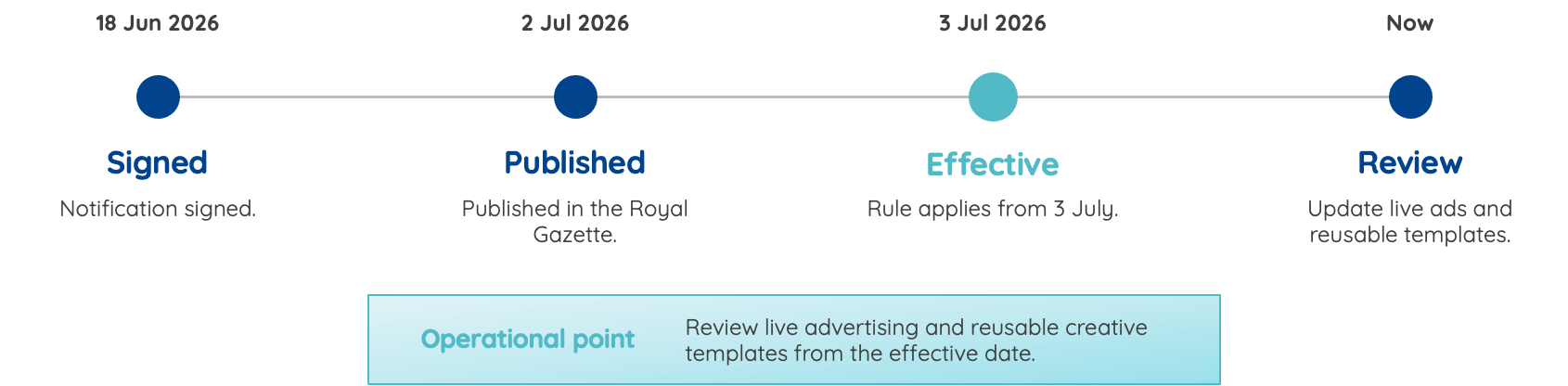
Figure 1. Timeline of the Medical Council’s amendment allowing nickname use in cosmetic-enhancement advertising from 3 July 2026.
The change is deliberately limited. It does not relax the general controls on advertising by medical practitioners, nor does it create a new category of promotional claim. Instead, it gives practitioners a compliant method to include a nickname in advertising, provided the nickname is presented together with, and on the same visual terms as, the practitioner’s legal identity.
Regulatory Background
The Medical Council issued the Original Notification under Section 21(1) of the Medical Profession Act B.E. 2525 (1982), which empowers the Medical Council committee to control the conduct of medical practitioners in accordance with professional ethics. The Original Notification was designed to ensure that patients receiving beautification or cosmetic-enhancement services receive accurate information necessary for their decision-making.
For this purpose, the Original Notification defines advertising broadly to include the publication or communication of information about medical practice relating to beautification or cosmetic enhancement in hospitals, public media, online media, private or specific-group media, and public places. The scope is therefore not limited to traditional advertising. It covers websites, social media posts, online groups, clinic signage and other media through which services are promoted.
Who Must Comply
The legal duty is framed around medical practitioners who advertise beautification or cosmetic-enhancement services. In practice, hospitals, clinics and platform operators that prepare or publish advertising using a practitioner’s name should also align their internal approval processes with the Notification, because the advertising content can create disciplinary exposure for the practitioner identified in the advertisement.
✓ Hospitals, clinics and other licensed healthcare facilities using practitioner names in service promotions.
✓ Traditional media placements, including television, newspapers and other public media.
✓ Websites, social media platforms, paid digital campaigns and clinic profile pages.
✓ Private or closed online groups where cosmetic-enhancement services are promoted.
✓ Public places, including physical signage and promotional displays.
What Has Changed
The Original Notification already required relevant advertisements to show the practitioner’s real first name, surname and medical license number, and permitted the advertisement to identify the procedure or operation relating to the beautification or cosmetic-enhancement service. It did not expressly address nicknames. The Amendment replaces Clause 6 so that a nickname may now be shown, but only under a strict equal-display rule.
| Regulatory focus | Original position | Current position after the Amendment | Practical effect |
| Use of nicknames | Not expressly addressed in Clause 6. | Permitted if the nickname appears in the same area as the real first name and surname and uses lettering with the same color, style and size. | Nicknames can be used, but cannot be visually separated, enlarged, stylized or highlighted in a way that competes with the legal name. |
| Legal identity | Real first name, surname and medical license number required. | Requirement retained; the nickname is optional and additional. | The legal name and license number remain the anchor of the advertisement. |
| Procedure name | The advertisement may show the name of the procedure or operation. | Unchanged. | Clinics may continue identifying the service, subject to the broader ethics and advertising limits. |
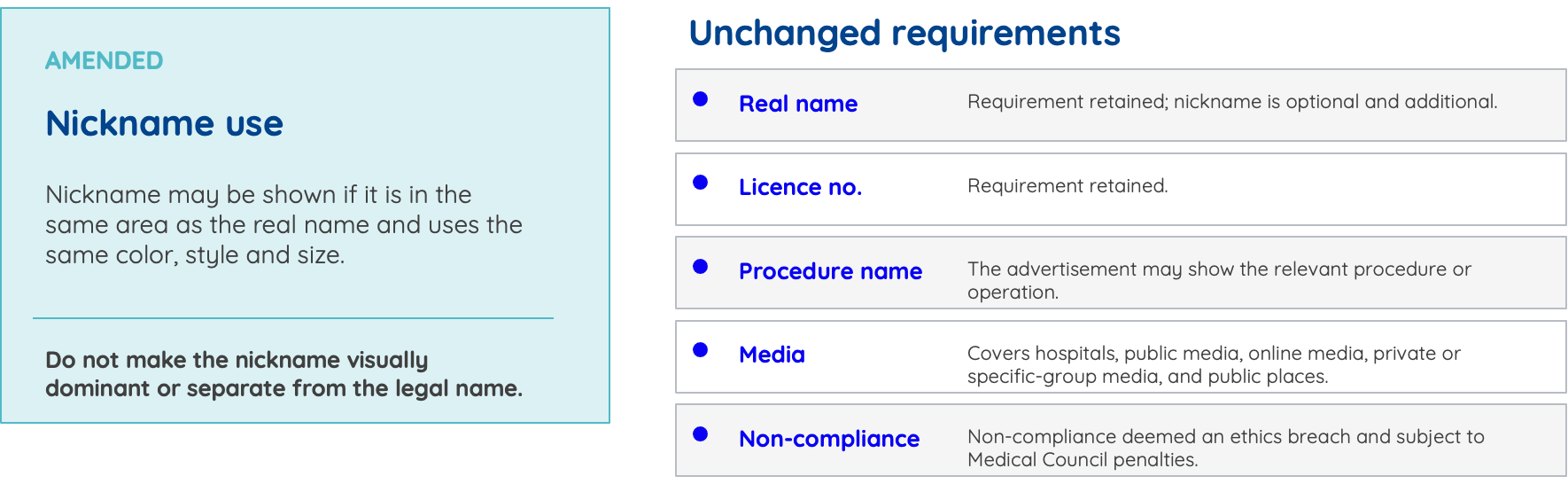
Figure 2. Key changes and unchanged requirements under Thailand’s updated cosmetic-enhancement advertising rules.
What Remains Unchanged
All other requirements under the Original Notification remain in force. The Amendment should therefore be treated as a formatting and identity-disclosure update, not as a relaxation of the broader medical advertising regime.
✓ The advertisement must still identify the practitioner by real first name and surname.
✓ The practitioner’s medical licence number must still be displayed.
✓ Practitioners may identify the relevant procedure or operation, but must remain within professional ethics and other applicable healthcare advertising controls.
✓ Restrictions on claiming specialist knowledge or expertise remain relevant, particularly where the practitioner does or does not hold the relevant certificate, approval letter or recognised qualification.
✓ Practitioners remain subject to the Medical Council’s professional ethics framework, including the ethics rules referred to in the Original Notification.
Practical Implications
The most immediate compliance task is visual. Clinics and hospitals should review all advertisements that use familiar doctor nicknames – for example in social media banners, profile cards, video captions, paid ads, website booking pages and clinic signage. A nickname should not appear as a standalone brand name, a larger headline, a different color, or a more decorative type style unless the practitioner’s real name is presented in the same area and on the same typographic footing.
Because the Amendment took effect on 3 July 2026 and does not appear to provide a separate transition period for nickname formatting, existing advertisements should be updated promptly. A practical review should cover both live media and reusable creative templates, because non-compliant formatting can recur whenever staff reuse an old profile or promotional format.
| Review point | Compliance question |
| Identity | Does the ad show the practitioner’s real first name, surname and medical license number? |
| Nickname | If a nickname is used, is it in the same area as the real name and surname? |
| Typography | Does the nickname use the same color, style and size as the real name? |
| Media coverage | Have website, social, paid media, private groups, signage and printed materials all been checked? |
| Claims | Are expertise, specialist and procedure claims supported by the relevant qualifications and approval evidence? |
| Approval trail | Is there a documented approval record before publication or reuse? |
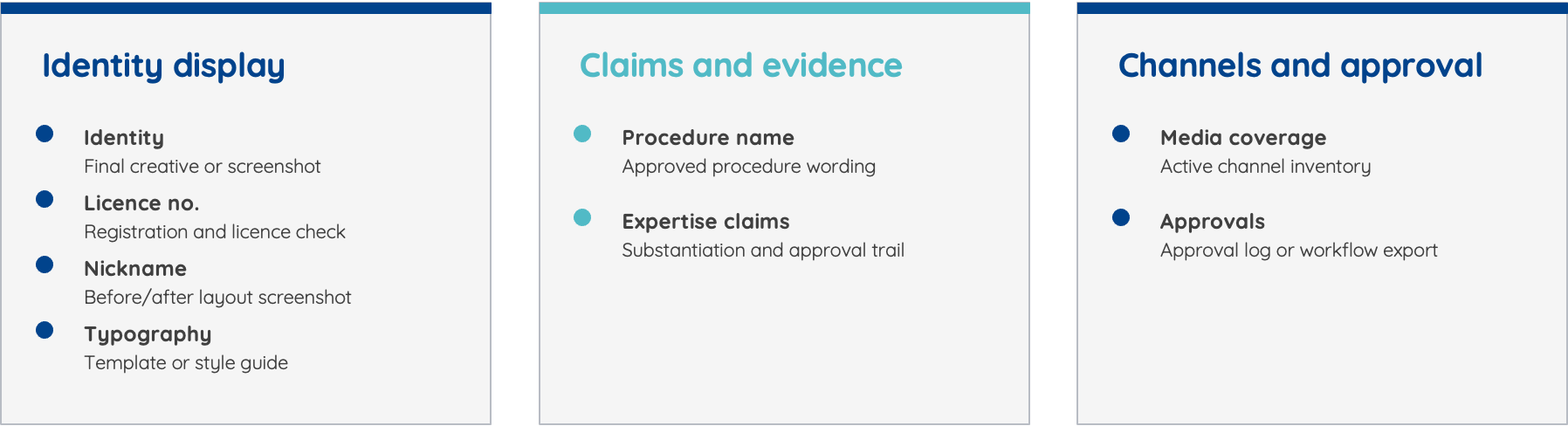
Figure 3. Practical compliance checklist for identity display, claims review, media coverage and approval controls.
Enforcement and Non-Compliance
Clause 10 of the Original Notification provides that a medical practitioner who does not comply with the Notification is deemed to have breached the professional ethics of the medical profession and is subject to penalties prescribed by the Medical Council. Under the Medical Profession Act B.E. 2525, disciplinary outcomes available to the Medical Council include admonition, probation, suspension of the medical license for a period considered appropriate but not exceeding two years, and revocation of the license.
For that reason, the Amendment is operationally significant even though the textual change is small. A nickname is often used to create familiarity and recall, particularly in aesthetic medicine marketing. The new rule allows that practice, but only where the advertisement does not obscure the practitioner’s legal identity or make the nickname visually dominant.
Recommended Immediate Actions
✓ Inventory all active beautification and cosmetic-enhancement advertising that uses practitioner names or nicknames.
✓ Update design templates so the real first name, surname, licence number and any nickname appear consistently and in the required area.
✓ Train marketing and front-office teams on the equal-display rule before approving posts or profile cards.
✓ Keep source evidence for practitioner qualifications and procedure descriptions used in advertising.
✓ Document sign-off for advertisements before publication and retain screenshots of final versions.

Figure 4. Recommended review process for updating practitioner advertisements and reusable creative templates.
Conclusion
The Amendment brings a practical clarification to Thailand’s cosmetic-enhancement advertising rules. It recognizes that nicknames are commonly used in the market, but it channels that use through an identity-transparency requirement. For practitioners and healthcare businesses, the safest approach is to treat the real name and license number as non-negotiable elements of every advertisement, and to use nicknames only as an equal-format supplement to that legal identity.
This article is provided for general informational purposes only and does not constitute legal, tax or professional advice. Readers should seek advice based on their specific circumstances before acting on this information.